
A Director's Own Remake: Kiyoshi Kurosawa's Serpent's Path (2024)
There is a history of great directors remaking their own work. Alfred Hitchcock famously remade The Man Who Knew Too Much as a Hollywood production, while international auteurs like Michael Haneke (Funny Games) and Takashi Shimizu (The Grudge) stayed in the director’s chair when their work was adapted into English. The latest filmmaker to join this esteemed cohort is genre-bending Japanese master Kiyoshi Kurosawa, who recently remade his 1998 thriller Serpent’s Path in the French language.
One might think that having nearly thirty more years of experience as a filmmaker under his belt would lead this remake of Serpent’s Path to feel more refined and perhaps even better than the original. However, while the French version is more polished, it is the angry, messy energy that makes the original film tick.

Serpent’s Path follows a psychologist who is recruited by a grieving father to track down and exact revenge on the criminal organization responsible for kidnapping his daughter. It’s much more psychological and less action-packed than your typical revenge thriller, although anyone who knows the work of Kurosawa knows that he manages to find a way to sneak in a few exciting set pieces.
As with many remakes–and especially the aforementioned films helmed by the same director–it is interesting to see how Serpent’s Path is in conversation with the original work. The 1998 film was released the year after Kurosawa was propelled onto the international stage with the J-horror classic Cure. It was one of eleven films that Kurosawa made from 1996-1998, shot on a very limited budget and tight production schedule, and released direct-to-video. Although the director still has a rather prolific output, this remake allowed him the opportunity to bide his time a bit more with the material.
One area in which time served Serpent’s Path particularly well is its tone. The original film oscillated between being an incredibly bleak thriller and an unexpectedly (albeit darkly) funny comedy of errors. This version maintains a more somber tone throughout, not particularly lingering on the cruelty or violence of the situation but on the emotions it elicits in the characters.
And in this way, the film’s short bursts of brutality do have a much different impact than the more sustained tension of the original version. The feeling that much of the 1998 version inspired was disgust, whereas this new take seems more interested in making the audience feel sadness. Although one could argue that this is a more conventional approach, Kurosawa keeps the film from ever veering into kidnapping tear-jerker territory.
The success of this emotional angle is largely thanks to lead actress Kō Shibasaki, who is excellent in her role. However, this is not merely a gender swap of the character played by Show Aikawa in the original; Kō feels like she is playing an entirely different character. Show’s subtle badassery is traded for Kō’s quiet disassociation, allowing this to feel like a different perspective on the psychological impacts of violence.
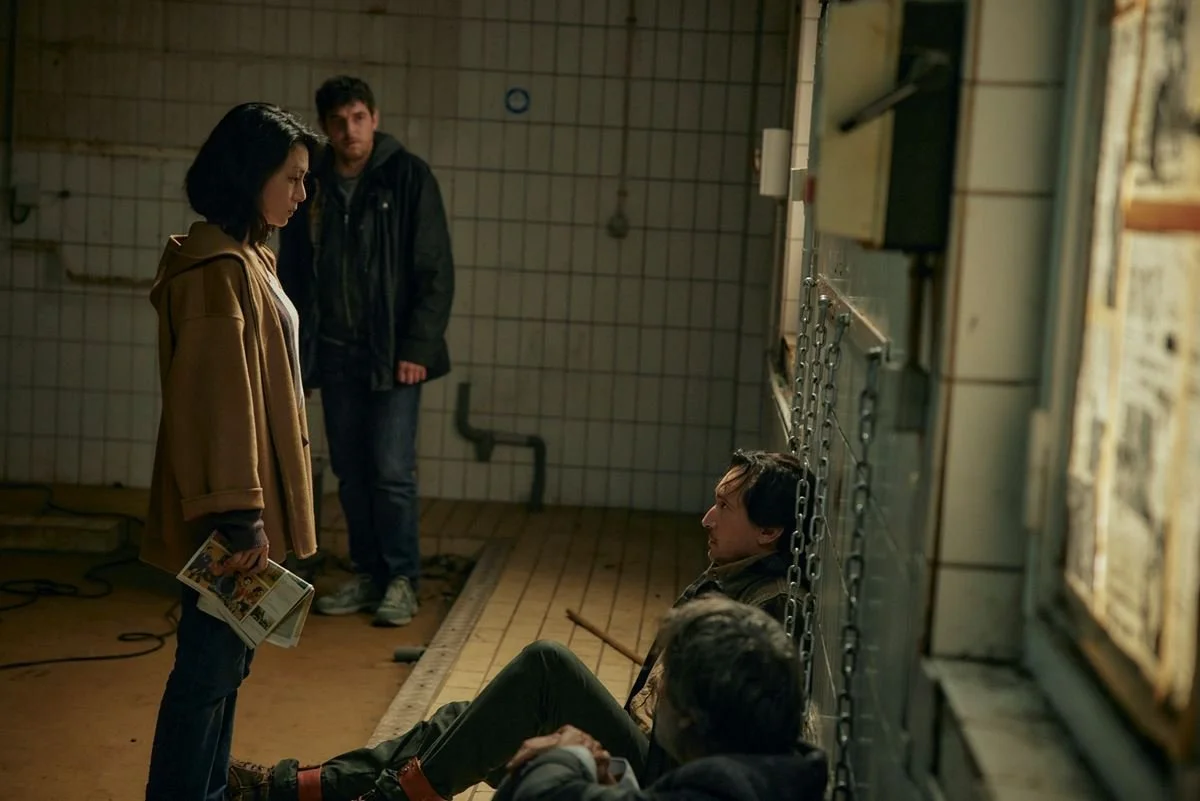
The French cast doesn’t make as much of an impression as Kō, which is surprising, considering that there are a few recognizable names in the bunch, including Damien Bonnard (Ladj Ly’s Les Misérables) and Mathieu Amalric (The Diving Bell and the Butterfly). But the reason that these more internationally known actors are a bit more underwhelming is that their roles feel more like worn ground for the genre, compared to Kō’s fresher take.
Then, there is Hidetoshi Nishijima, whom fans might recognize as the star of the critically acclaimed Drive My Car (or the also-acclaimed Shin Godzilla). He plays a role that does not have a counterpart in the original film: a patient of the psychiatrist played by Kō, struggling with his own feelings of alienation in a foreign country. Nishijima is good in his role, but it’s hard to really say that his presence in the story is strictly necessary, especially when it contributes to a runtime that is almost half an hour longer than the original.
This immigration angle is entirely new to the remake, and while the intention here is noble, it does not feel entirely effective. Had Kurosawa and co-writer Aurélien Ferenczi taken a more political approach to this topic, it could have been compelling. After all, reports estimate that around 90% of individuals (many of whom are assumed to be trafficking victims) in commercial sex in France are foreign nationals (though the film is about organ trafficking and not sex trafficking). Still, Serpent’s Path takes a largely apolitical approach, instead using its immigration themes as another outlet for the protagonist to explore her own disillusionment with the system.
While Serpent’s Path is hardly bad, any Kurosawa fan would likely consider it to be in the lower third of the filmmaker’s pantheon, if only because it feels so workmanlike and routine. This is especially the case considering that earlier this year, we saw Kurosawa do something unique and different from anything else he has ever done before–and something he has wanted to accomplish for decades, no less–with The Samurai and the Prisoner.
Still, if a remake of Serpent’s Path had to be made, it’s better for it to have been in the hands of Kurosawa himself than anyone else. It’s not necessarily an improvement on its predecessor, but Kurosawa’s competence and assuredness as a filmmaker ensure that this is still a serviceable, watchable thriller, and there are plenty of films in this genre that lack those qualities.
If you enjoyed this article, please consider becoming a patron of Hyperreal Film Journal for as low as $3 a month!
Sean is a film critic, filmmaker, and life-long cinephile. For as long as he can remember, he has always loved film, but he credits the film Pan's Labyrinth as having started his love of film as art. Sean enjoys watching many types of films, although some personal favorite genres include music documentaries, heist movies, and experimental horror.