
Weird Wednesdays: Pedicab Driver
I do not enjoy violence. I find violent and violent-looking sports blood-curdling to watch. The amount of bruised and mangled bodies I have seen in my social media feeds fills my heart with sadness. I can handle violent video games and computer-generated action stories because of the distance CGI draws between what is real and what is fake, but exploitative “realistic” violent content in those veins is a no-go for me. Writing all of this, I must provide a caveat: I love action choreography of the Hong Kong cinematic variety. It is nothing short of magic. When choreographers place bodies in front of a camera, hiding just enough of the care put in to (try to) not hurt any of the actors or stunt workers, and it results in a roundhouse kick that sends a person flying across the screen, watching it is an amazing sensation. This feels counter-intuitive to everything I feel about violence in this world, yet I can’t get enough of it.
In the middle of February, when movie theaters around the country screen both classic Valentine’s Day films and off-the-beaten-path romantic repertory programming, Weird Wednesday at Alamo Drafthouse South Lamar presented director Sammo Hung’s rom-com action film Pedicab Driver. Hung, a master of Hong Kong martial arts filmmaking and choreography who attended the same drama school as Jackie Chan, stars as pedicab leader Lo Tung in this story of four pedicab drivers fighting for love and justice in the corrupt world of 80s Macau. Hung delivers a wild film filled with sweet rom-com sequences, fun bits of labor discourse, and a sincere analysis of the sex work industry. Throughout the film, Hung and the Sammo Hung Stuntmen’s Association, his fight choreography team, present three major fight sequences that could be the textbook definition of action choreography. These three sequences contain all the things I absolutely adore about martial arts filmmaking and the work that goes into bringing these movies to life.
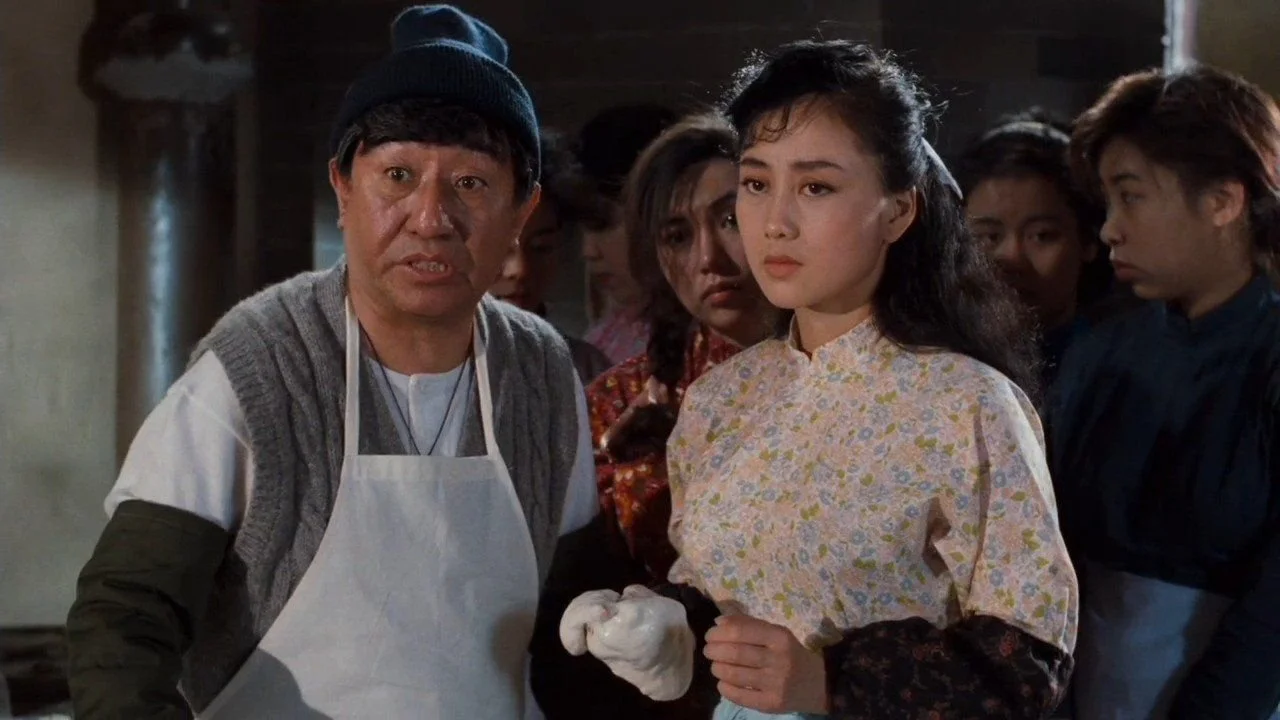
Before any storyline commences, Hung introduces the audience to our pedicab drivers through a labor dispute turned bar brawl. As they bargain over who should be allowed to ride pedicabs and what should be considered delivery driver territory (and have a hilarious debate about delivering people and their luggage separately based on a technicality), a misconstrued antagonism leads to tables being flipped over, a dozen fights-within-a-fight commencing, and a silly allusion to Star Wars wherein tube lights are used as swords. The bar is arguably cinema’s most relatable fight setting, and Hung and company use every square inch of it. Chairs get thrown, as they tend to, tables get split in half, and anything not glued to the ground gets broken across someone’s back. The weapons used in this scene, from giant jars to decorative poles, give every sub-fight a gag and draw a big “oooooh” from the audience as someone gets knocked across the skull. There is even a Stooges-level eyepoke bit, slowed down for peak comedic effect, that pays tribute to the deep shared history between cinematic physical comedy and martial arts choreography. This sequence introduces the heroes of the film and what they are willing to destroy a saloon over: injustice that they see in the world.
Even with such a high goof-per-minute ratio in this first fight, it is somehow eclipsed by the fights later in the film, as Hung digs deeper into his story and abandons the pedicab vs. delivery driver feud almost immediately.
The fight that the film spends the rest of its runtime building toward is a battle with evil brothel owner Master 5 and his goons at his mansion, following Master 5’s directed murder of a pedicab driver and the driver’s newfound love. This final fight finds Lo Tung coming face-to-face with his nemesis, the man responsible for his friends’ deaths, and abandoning his sense of humor and lackadaisical attitude to fight the big boss. Despite being in a house filled with objects, Lo Tung throws almost nothing but fists and feet in this intense sequence. The battle is segmented across multiple sub-locations–the second floor of the house, the staircase (for necessary cinematic verticality), and the expensive-looking living room–with Hung using these locations to toss the characters around dramatically and keep the competitors visually close as they destroy the set. This sequence, in contrast with the rest of Pedicab Driver, stands out as serious even as Master 5, a character portrayed mostly as ridiculous, stands on the sidelines bickering at Lo Tung. The choreography team’s ability to communicate the high stakes visibly and physically, without removing the comedic elements of their characters, shows a mastery of the form that can’t help but be enjoyed. While an amazing climax for the ridiculous movie that precedes it, it is not even the best fight in the film.
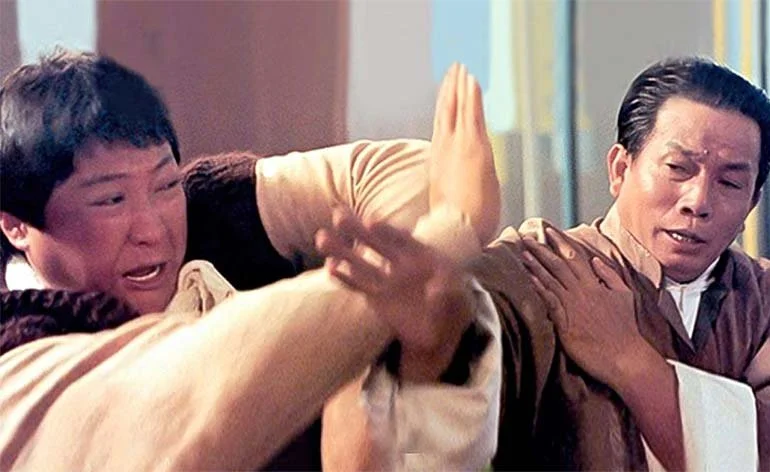
Between the opening labor dispute and the big bad mansion fight are a variety of smaller fight sequences–and eclipsing it all is an excellent one-on-one between Lo Tung and the Gambling House Boss, played by filmmaker and fight choreographer Lau Kar-Leung, a staple of 70s martial art films and a major influence on Hung and his generation. Taking place in a segment of the film almost completely separate from the plot, it is the longest single fight in Pedicab Driver and the one most stylistically impressive and straightforward. Here, Hung and Lau engage in a close-quarters fight that feels of its own world, with its own extratextual sense of humor. The two mock each other and poke fun at the styles they represent, with Lau using traditional fighting stances and moves and Hung ridiculing these self-serious tropes. According to Weird Wednesday programmer Laird Jimenez, Lau’s inclusion in this film, only appearing in this scene, plays like a tribute being paid to a master of the cinematic form that Hung would pioneer into the future. This sense of respect, and the excitement of this kind of work, can be felt while watching the scene: a moment to celebrate those who came before in the middle of a contemporary martial arts film. The hand-to-hand combat is fascinating to watch, the pole work is very impressive, and both filmmakers seem to be enjoying this fight that somehow means nothing to the plot and everything to the performers. There’s a chance that the people onscreen are having more fun than the viewer, and I think that is the secret to action choreography magic.
Whether it is through the humor of the bar brawl, the climactic expression of the final fight, or the self-aware presentation of the Hong/Lau fight, the commitment to and the passion for the craft found in Pedicab Driver’s action scenes speak for themselves. This kind of work–the same work done for centuries on stages and translated into the medium of film upon its invention–is not about viscerally presenting the reality of violence, trying to genuinely hurt others, or attempting to hide the violence in an enjoyable form. Rather, it is a celebration of the movement of the human body and its ability to tell stories through physicality alone. These sequences, as well as plenty of shorter ones throughout the film, are engaging pieces of art by themselves, showing the collaboration necessary between a stunt team, the director, and the cinematographer to create the magic of fighting that comes to life onscreen. In a month filled with films about first, new, and reacquainted loves, I was glad to catch one filled with the contagious love of watching people do what they enjoy.
If you enjoyed this article, please consider becoming a patron of Hyperreal Film Journal for as low as $3 a month!
This is Dylan Samuel. If you see him, say “hello.”