
Late Fame: It Makes You Think
The best writer I’ve ever known died before he was 35 of a sudden seizure—his works were almost entirely online, scattered across now-defunct websites, Twitter threads, a few magazines, and a Substack that was cut tragically short. I want to believe that his work will endure, that his unfortunately short career will mean as much to someone else as his inspirations meant to him, but I don't know if that's true. So much of success and recognition is dependent on factors far removed from the writing itself, as much luck and circumstance as it is skill and talent.
Late Fame is a film that reckons with that fundamental truth not only in the story itself–which follows an obscure poet whose 1950s work is "rediscovered" by The Enthusiasm Society, a group of Bohemian era-worshipping rich kids–but behind the camera as well. Late Fame is the third feature film directed by Kent Jones, who's better known for being TIFF’s Artistic Director than he is as a filmmaker. I'm sure he knows a thing or two about who gets recognized for what work when. It's written by Samy Burch, the writer behind May December (2024, a film that I remain gobsmacked didn't catapult both her and star Charles Melton into A-list territory) and Coyote vs. ACME (2026), a movie that nearly didn't come out at all. And it's adapted from a posthumous work by Arthur Schnitzler, a novelist and playwright whose works were so controversial that they were used as an example of "Jewish filth" by Adolf Hitler.
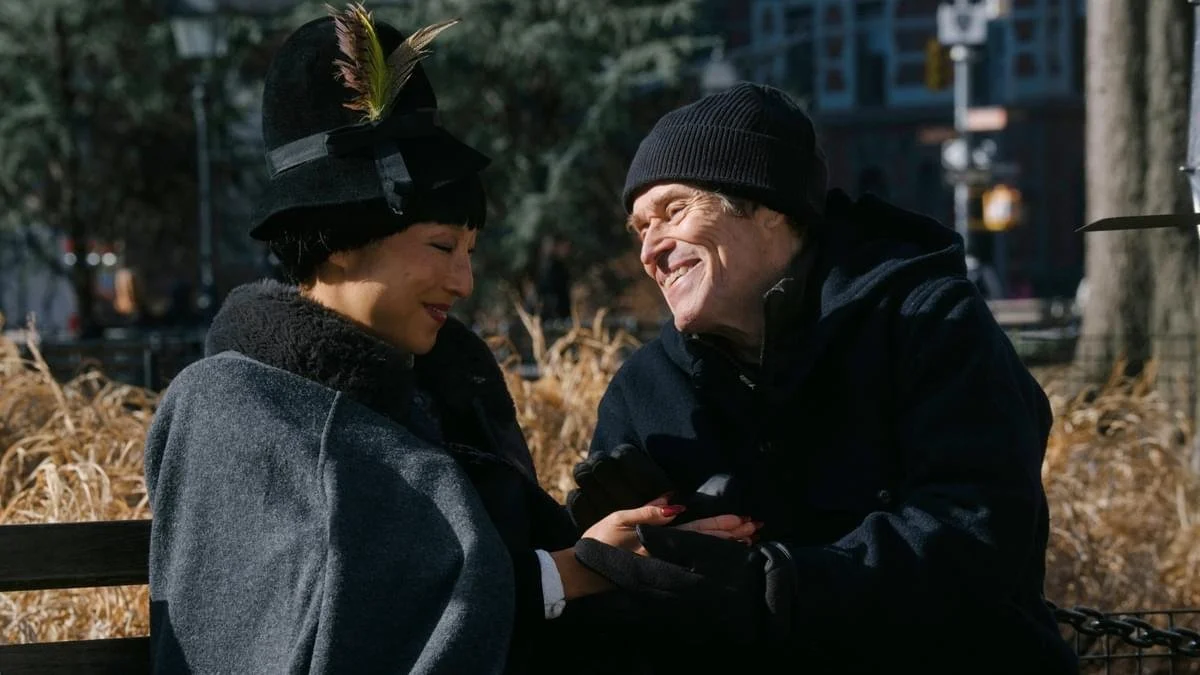
All of this swirling context might not be apparent to the average viewer, but the star of the film personifies the subtext with one gentle, toothy smile. Willem DaFoe has had a unique career in Hollywood by any measure, and if the wave of adulation among people my age and younger within the film scene is any indication, he's experiencing his own late fame pop. He was always famous, but now he's beloved, even as he tells interviewers stories of growing up in Wisconsin and preferring the theater to the movies. The movie's themes and gestures at importance are expertly carried by the lines of DaFoe's face or the little pause he has before responding to praise as if uncertain if it's genuine.
Late Fame is a movie about performance, centered around a brilliant one, but perhaps too in love with it to make sure that everything else works around DaFoe. He's in every scene of the film, and the audience is only privy to his point of view and only knows the information that he receives onscreen. Sometimes that's a strength, but other times it leads to awkward bits of exposition to make certain plot beats obvious to the viewer or leaving characters feeling like archetypes and broad strokes rather than living beings having their own lives away from DaFoe.
The jokes in the movie are all about the gap between the working-class grit of the Bohemian era and the rich kids in the present day cosplaying as starving artists (and I'll readily admit they worked on me.) They wear high end fashion meant to look thrashed and vintage, decry social media ("sociopathic media", as one critic essayist character in the film calls it), and fetishize DaFoe's thirty-plus years sorting mail at the post office. Every time I felt like the jokes were too broad or too easy, I remembered friends of friends I met who lived in New York who were as clueless to their own lack of talent and surplus of funds as these kids, so maybe New York is just Like That.
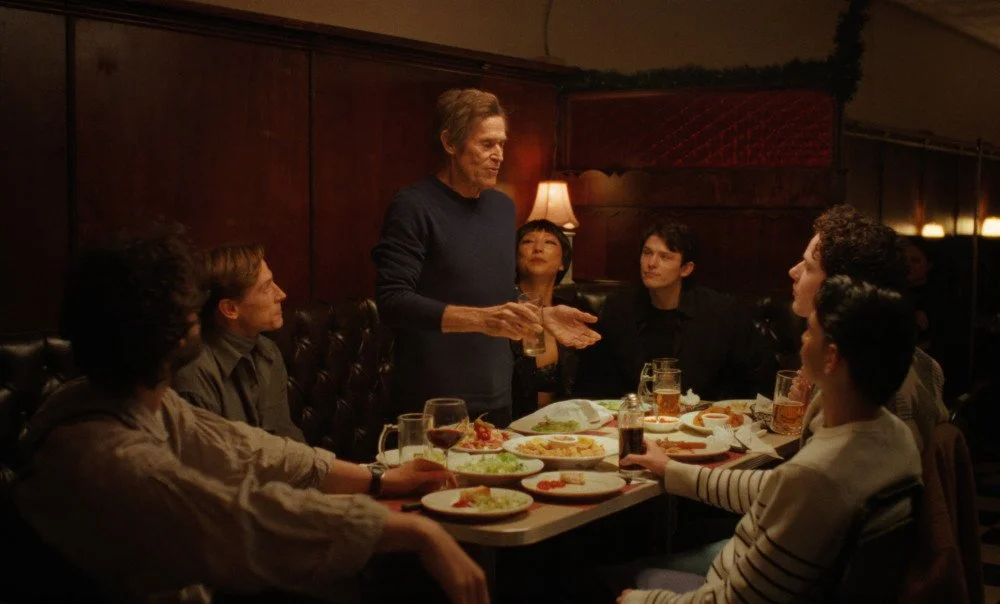
The sole exception is Gloria (Greta Lee), a woman doing her best Norma Desmond/aging ingenue impression because, in her words, it's "easier to be an ingenue [than a female genius]." Lee's able to nail a high-risk balancing act as a character that wavers between sincere and cloying, an actress more talented than the rest of the half-hearted writers she prances between but still not quite talented enough to leave them behind entirely. Every character in the film is looking for some truth in their art, but she's the only one that seems to know what kind of art she wants to make.
Outside of the performances themselves, the story as a whole doesn't ever quite come together. It wobbles between a straightforward narrative (Ed has to write a new poem to show the kids that he's still able to be an active artist while ignoring his dying brother's requests to see him) and more of a mood piece about an aging artist remembering both that he's aging and that he's an artist in a New York City that's changed around him. When the film hits the latter tone, it's far more engaging; DaFoe and Lee are able to do so much with so little that they barely need a script. When the film tries to be plot-driven, as in a subplot where DaFoe's newly engaged artistic "stardom" leads him to talk down to his working-class bar friends, it feels like a stereotype pulled out of a movie decades old. After telling his friends that "they wouldn't get" his poetry, one jamoke says "waht, youse think we ain't intellectools or sumthin?"
Late Fame is a movie made more of good taste than of good artistic instinct—scenes seem to happen because, in this type of movie, that's where this scene tends to go. It's shot well; cinematographer Wyatt Garfield certainly knows how to display the interiors of New York apartment buildings of varying decadence after shooting A Different Man. But the visuals feel detached from the script which feels detached from the performances. It's a movie of good ingredients that never quite coalesces into a great meal. But it made me think about art, and the friends who never got to keep making it, and about whether simply surviving as an artist is enough to be important to your community, so maybe that's enough.
If you enjoyed this article, please consider becoming a patron of Hyperreal Film Journal for as low as $3 a month!
Ziah is the founder and former editor-in-chief of the Hyperreal Film Journal. He can usually be found at Austin Film Society or biking around town.