
AFF ‘26: Interview with Peter Gamble – Writer of I Play Rocky
I Play Rocky is the underdog story behind the underdog story. This biopic follows Sylvester Stallone’s determined journey writing and starring in the immediately classic Best Picture-winner Rocky (1976).
We sat down with Peter Gamble, the writer who brought this story to the screen. In our interview, you can read about writing what you know and from the heart, how an actor’s collaboration affects a script, and the importance of listening to your inner voice.
The following conversation has been edited for length and clarity.
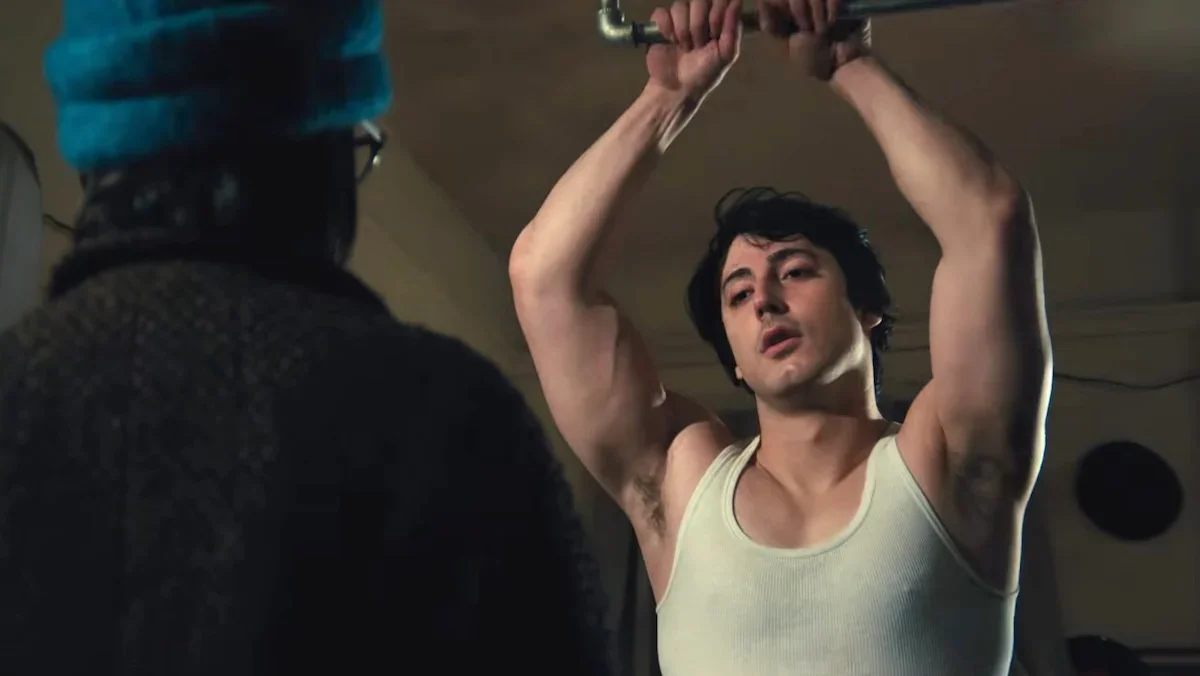
Hyperreal Film Club: What really spoke to me about I Play Rocky was your structuring of the script. How do you approach a biopic like this, and how can you use the tools that are built into the genre to avoid staleness?
Peter Gamble: Yeah, I mean, there's a couple things. The first thing is you gotta find something personal, a connection to it, right? I've been doing this for a long time, just barely holding on. I started my career doing some ghost writing. I wrote a movie that did really well, but no one knew I had anything to do with it. Then I worked for an A-list writer, and I was able to contribute and learn from and watch him. I think that I had this weird feeling that people had seen my work, but they hadn't seen me. We all feel like “I got something in me, if people could see, like, if I could crack my chest open, you could see that there's a light in here that's shining out.”
It's a pretty universal thing, but Stallone's story is like the universal story of that, right? It's the original. He had it so much worse, he had a speech impediment, a partially paralyzed face, and with those two things, people are like, “and you want to be an actor?” So I had a personal connection to that, and that's important because you can feel something when you write. You gotta take your shields down. I had to crack open all these shields and protections because I have to feel something when I write, because if I can't feel it, you're not going to feel it. You have to get vulnerable, deeply vulnerable when you write, allow yourself to find some way to connect to the material; to feel something and take risks. That means when you get feedback from people, it's gonna hurt more, but you have to be okay with that.
The second thing is, you have to listen to the story. My first idea was to emulate the structure of the movie Rocky. The whole first half of the movie is a love story, and he doesn't know he's going to fight till the midpoint. In my first draft, he didn't say, “I play Rocky” until the midpoint, but I heard from two or three different people who said, “No, you got to move that up.” There's an old saying, if more than one person tells you that you're drunk, lie down.
So, you listen to that, but at the same time, you also have to listen when your heart tells you that this is just wrong. You have to know how to listen to the notes when you're hearing them, but also how to occasionally just listen to your heart. There's a voice in your heart that's speaking to you all the time, and that voice in your soul, but it speaks in a whisper. The big secret is that if you start to listen, that voice gets louder and louder, and that's true as a writer. When you listen to your voice, that voice gets louder and louder and it's the greatest gift you can have as a writer.
I love the idea of collaboration in writing, because it’s such a solitary thing. I was speaking with your wife outside and she mentioned that you guys do reads with actors every Monday?
Let me describe this because, when you talk about a writer's group, they start and they disappear, and they disappear because of the structure of it. Some people don't write, they just show up to critique, and some people write, but then no one will read it. This writer's group is the oldest writer’s group in Los Angeles, and they figured it out. They have sixteen writers and every Monday at 6.30 p.m, four of those writers can bring in up to twenty-five pages each, then they have actors cold-read it.
What's amazing about that is no one has to read it before they come in, they just have to show up for those three hours. You get to watch actors who get the gift of embodying parts that maybe they might not be offered in the world, just having the joy of playing lots of different parts in the course of three hours. Then, you also get the gift of watching your stuff be performed by people who are so talented, and you can hear when it comes to life. There's moments where it's electric, you just go, “Oh my God, that's amazing.” Then suddenly you watch it go, and it crashes and you're like, “What just happened?” You get notes from these writers and everyone gets 45 minutes, then it's time for the next person. This is what every writer's group should do.
There's parallels in I Play Rocky with Jay Duplass’s character, who is talking about “the thing” in a movie, the moment that makes it a great film. Whenever you can start to feel that out in a script, that's really valuable.
We've been talking about this a lot because of Sasha [AnnaSophia Robb]. Sasha is the first person who really believes in Stallone [Anthony Ippolito], she really sees him as the whole human being. At the porn audition, he's only seen physically, but she sees his soul. What's interesting is, as creatives, there's two types of criticism. One type of criticism is, “Let me tell you what you're not doing right.” That can be valuable, but what’s just as valuable, maybe more valuable, is when someone says, “Let me reflect back at you.” This is what you're doing right, not wrong, and the minute that happens, something in your soul crystallizes. This is the greatest gift that we're given as writers, directors, actors, creatives, when people see us and reflect it back so we can see ourselves better.
I love that you mentioned Sasha, because she's such an important part of the film. A lot of the time it can get lost in a biopic, it feels like the supporting characters of the world all exist because the protagonist exists. Sasha's very much a bucking of that idea. Can you talk about how you were able to build out her character and all the other characters?
You know, I was looking for some weight in every character. Like Irwin Winkler, I listen to him and he's so analytical, so I wrote him as a scalpel of a human being; he's able to dissect everything and see everything. Then, I looked at [Robert] Chartoff and I couldn't find any interviews with him; he's sadly passed away, but I looked at these pictures and in all of the pictures he was this big teddy bear with his arms around people. So we have the heart and the mind, right? If you watch [Chartoff] really carefully, he's the emotional score of the movie. Sasha was tricky, because she's a very private person, and Stallone, when he talked about her, just said that she was the most supportive person in the world. That was great and helpful, but I also saw the optimism in her at that moment. The problem is, if the only thing in you is optimism, then you become kind of the manic pixie dream girl. There was great stuff, but it also felt a little flat. I got one of the greatest notes ever from my manager, he said, “Go look at Amy Adams in The Fighter.” So I did, and there was fierceness. So, when I took the optimism and the fierceness, I let them alchemize and meet together; that's when she came to life for me.
There's this idea that a character's greatest weakness should come from their greatest strengths, and I think you feel that with Sasha and Stallone, especially.
This is another thing; you sit and you figure out a character's flaw. If you're going to figure out what a character's flaw is, you also then want to ask what their strengths are. It's such a great thing to ask because you might realize someone's really selfish, but man, they know how to charm any human being on the planet. Or, someone is really proud, but they have so much compassion for the people around them, you just have to let their pride break down enough that it can come out. When you ask those questions, it unlocks characters for you.
It's very clear how much of a historian you were with this film. Can you talk about that push and pull of being a historian transcribing a story and a screenwriter making larger than life moments?
This is what's great, 98% of his story is true. We didn't have to embellish. In fact, in some places we have to pull back. Like, he said that he bought back his dog for $4,000, and Pete [Farrelly] was like, “No one's ever going to believe that.” So, what you have to do is take a person's life and figure out how to squeeze it down into two hours. Even in this film, where it's just a piece of his life, it's still years squeezed into two hours.
You're aiming for what happened with the [2015] Steve Jobs movie. Steve Wozniak saw Steve Jobs and he said, “none of this ever happened, but it's all true.” You're trying to tell the deepest spiritual truth of who this person was and what they went through, and you might have a moment where you have to figure something out. I didn’t know how he got his dog, but I knew that he had to get it at a certain point, so I made it up. That's one of the few things I made up for the movie.
But that’s what's great about Stallone's story. You pray for a story like this, because it's so good. What he has to say about the universe by going through this thing. The reason that we love Rocky is because of what the movie says about the universe, and how the universe works, and that you have to believe in yourself, even after failure. You have to find a way to believe in yourself because if you can't believe in yourself or the minute you say, “I can't do something” you're right. I believe right now at this moment, more than anything, we have to believe that we can make the world a better place.
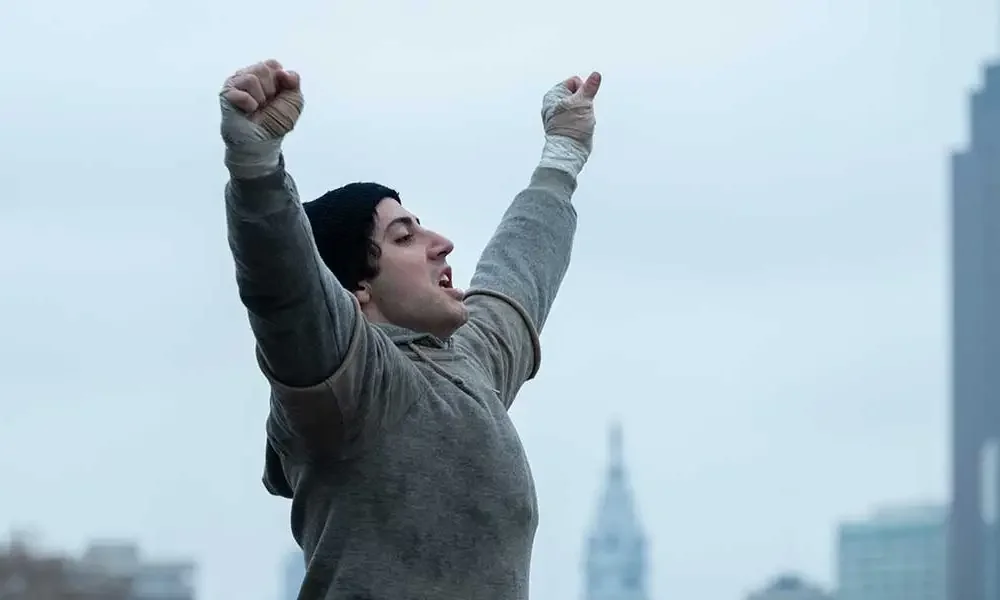
Anthony Ippolito is magnetic in this film, truly terrific. You mentioned earlier that the script is a living document. How does an actor like that, who can bring that much to a character, affect the script? How does the script affect him?
It just depends on people. In my case, people come up and go, “do you mind if I change the lines?” I don't care. I always say, “I care about emotion. I don't care about the words.” So, as a general rule, I love it when people change my lines. I will also tell you that PJ Byrne is a gift to this movie. So many of the best lines in the movie are things that he says, he made every scene that he's in better. I know some people here [at Austin Film Festival] are people who want to write, act, or direct. There's people who are doing that, but there's people who might be where I've been for 30 years, which is “how do you keep moving forward when the universe is not necessarily responding to you.” If I could just share a couple thoughts.
Yes, please.
You gotta get yourself out of the place where you reward yourself by asking if the universe is responding.
You go to work every day and as a writer, instead of going, “Did I write great pages today?” You go, “Okay, let me judge it differently. How many hours did I put in today? Did I have only two hours to write and I used every second of those two hours?” If I did six to eight hours of writing, then I don't care that I only wrote 2 pages, that was a great day.
I also believe in the amount of joy you can find in what you're doing because there are times when we're worn down by life. How do you keep moving forward? You have to remind yourself that what you're doing is amazing. The act of writing, sitting down and putting words on a page is amazing. If I don't want to get in front of the computer, I get up and walk around the block, and as you're walking around the block, you get yourself excited. Just remind yourself that this is the best job in the whole world.
Then the last thing is, what can you control? One of the things I often do is say, “okay what do I want to work on today?” I crack open a script and I would read a couple pages, and I would look for any one thing in that script that I loved. I'd use it as a little piece of something in another script. We learn if we imitate it first, you imitate, and then you get to a point where you kind of have digested it, and then eventually you get to the point where you understand it so well that it's no longer another person's voice, it becomes your own and you start to innovate. I figured if I do those three things, if I put the time in, put the joy in, and I find a way to be a better writer every day, I was doing the right thing.
If you enjoyed this article, please consider becoming a patron of Hyperreal Film Journal for as low as $3 a month!
Hello! My name is Eli and I am a film fanatic based out of Houston, Texas. I am currently working on becoming a filmmaker, while also working full time. Film is my hyper fixation turned passion. I simply adore the flicks! I love learning about the history of cinema and seeing how that history shapes what we watch today.
I talk about movies on my Instagram: @notelifischer, TikTok: @loads.of.lemons, and Letterboxd: @Loads_of_Lemons