
SXSW '26: Interview with Christopher Lee Warren on I Love Boosters, DreamQuil, and more
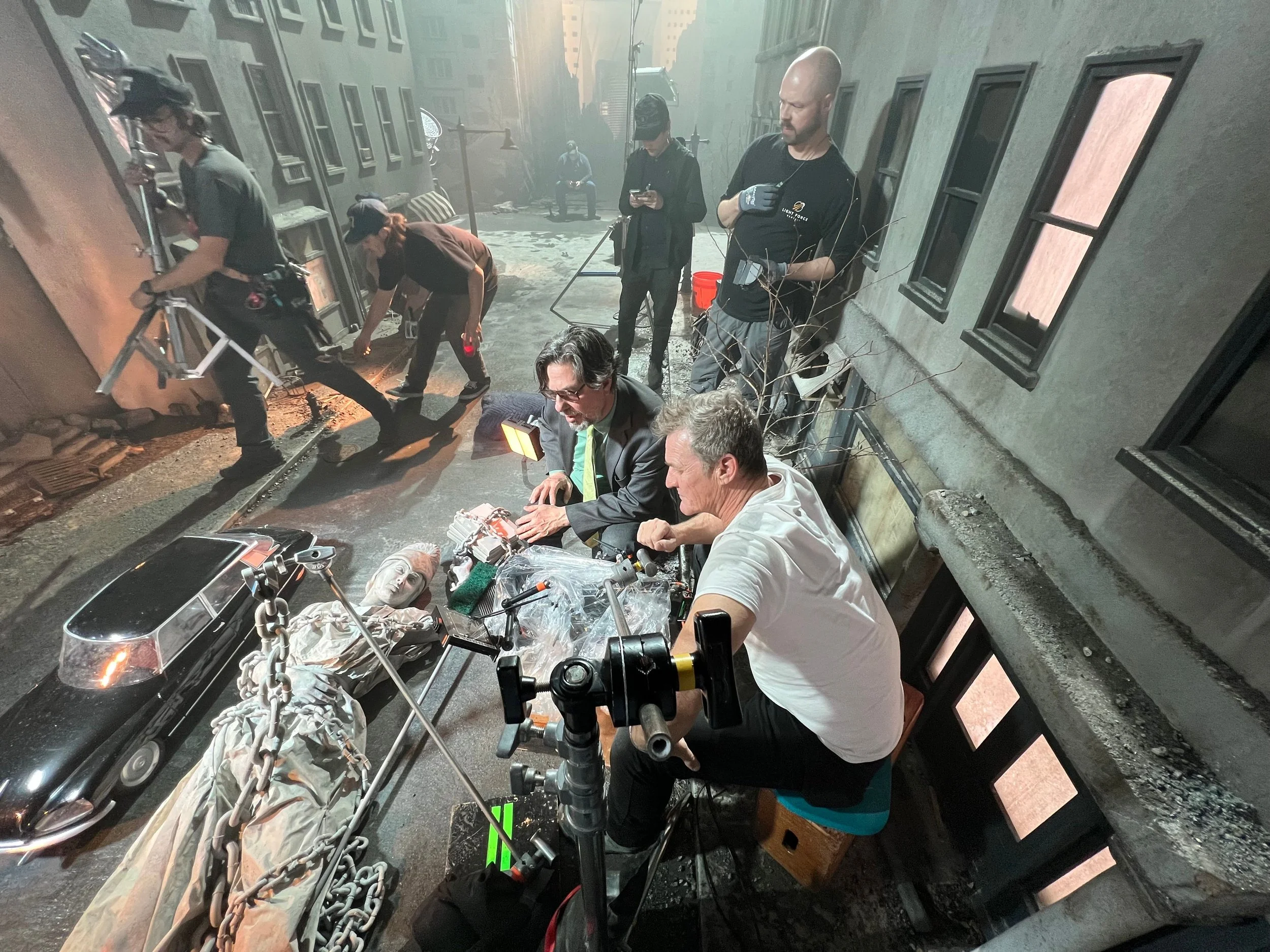
AI may be taking over the film industry, but the art of practical effects is still alive and well—at least where third-generation visual effects artist Christopher Lee Warren is concerned. Two films premiering at the SXSW Film & TV Festival this year, Boots Riley’s I Love Boosters and Alex Prager’s DreamQuil, feature miniatures designed by Warren and his team at Blind Beagle VFX. From replicas of the spiral escalators in a San Francisco mall to an intricate car chase scene, the miniature effects in each movie make it clear this craftsmanship isn’t a dying art.
Warren comes from a long line of visual effects artists: his grandfather, Gene Warren, started his career working on Outer Limits and The Twilight Zone, and later won an Oscar for his work on George Pal’s The Time Machine. It took Warren a few years to get started in the business—“I just wanted to live a little before I sold my soul,” he told me—but in 1986, he joined his father’s visual effects company and spent the next three decades working on Hollywood blockbusters and cult favorites like Terminator 2: Judgment Day and Bram Stoker’s Dracula.
After CGI heralded the end of his father’s company, Warren worked freelance until a call from Roman Coppola brought him out to Atlanta to shoot miniature scenes for Francis Ford Coppola’s Megalopolis. Warren then opened up his own company, continuing the family tradition with his brother and his son. We sat down with Warren to talk about the history and the future of visual effects.
The following conversation has been edited for length and clarity.
What was the driving force behind you starting your own company?
When I left Atlanta, it only took me eight months to open up my company because I said, “Well, I think business still needs the Warrens, especially in this world of CGI.” I think there's gonna be a resurgence of this. I taught at USC for six years, and all the students coming up want practicals. They don't want to play a video game and then go watch one. All the signs were there for me to reopen.
So that’s where we're at. There’s two Oscars. Only the Hustons and Coppolas have three generations [of Oscar winners]. All my life, I always wanted to be the third family to do it. And if I get an Oscar, great, if I don’t, fine—but they’re not going to knock on my door and give it to me.
Can you tell me about what the visual effects industry was like when you first started off in the business?
Effects movies were B movies, even C movies. Nobody gave a budget for effects. They were kids' movies. Now you can't have a blockbuster without 500 over-the-top effects in it. So in the early '80s, when my dad started, we did a little movie called The Terminator, which had a $5 million budget, made $40 million at the box office [ed. note: The Terminator netted $78 million at the box office on a $6.4 million budget]—huge success for the time. That's a lot of money in the early ‘80s. The boom of visual effects in movies started right then and there.
My father's company was only one of five or six houses. We did Fright Night Part 2, Killer Clowns from Outer Space, some really cultish movies. The Abyss in ’89, and then Bram Stoker's Dracula came in ‘91 and Terminator 2 came in ’92, and that's when our family won their second Oscar. For me, that was a very special night, because I got to go with my dad and my grandfather [to the Academy Awards].
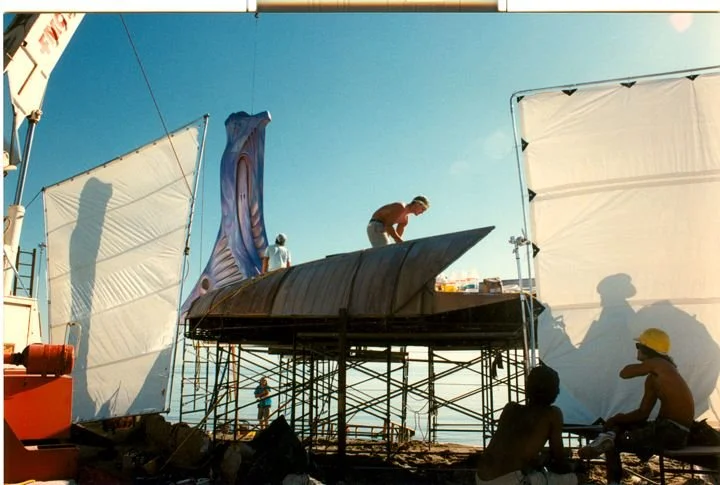
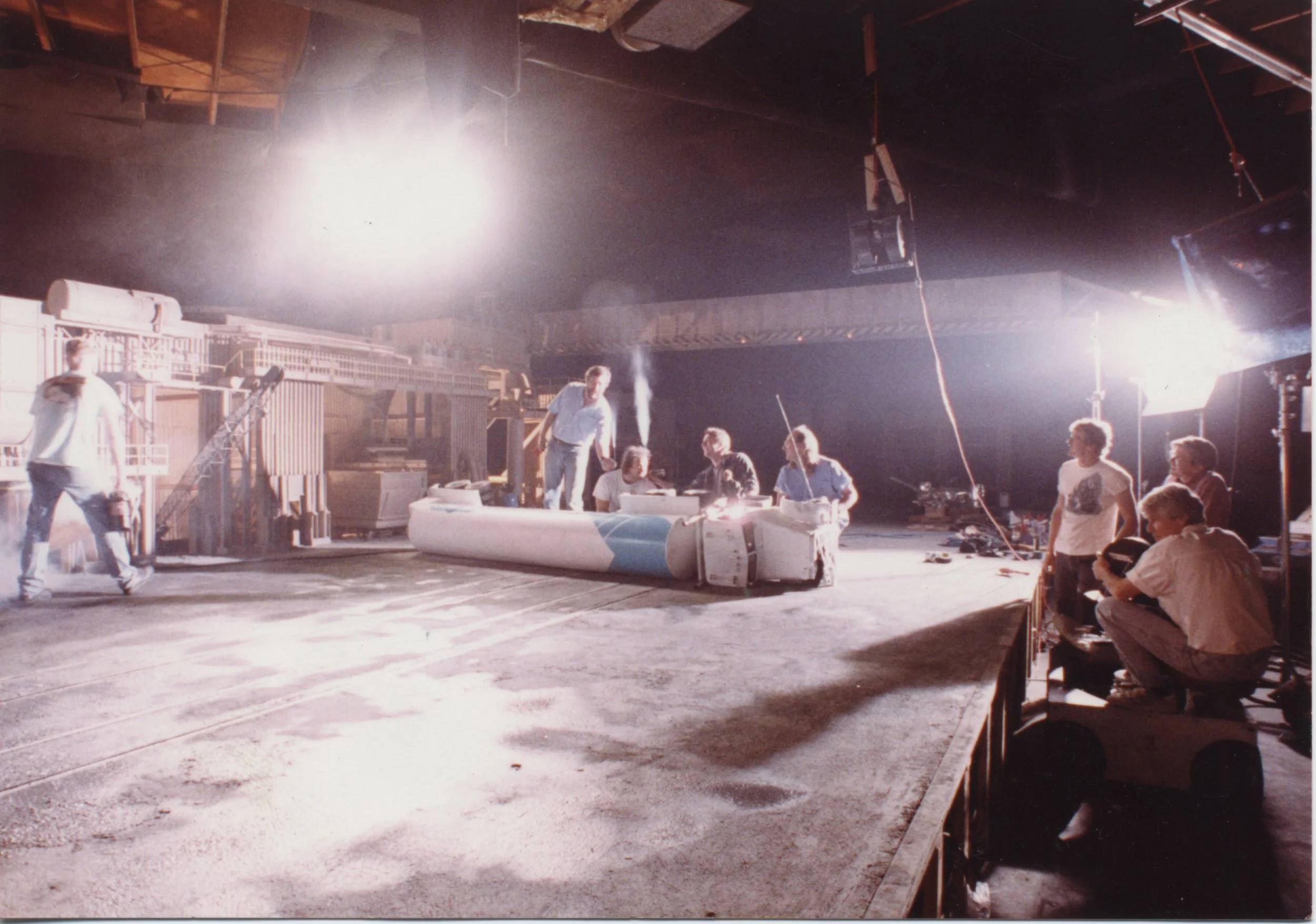
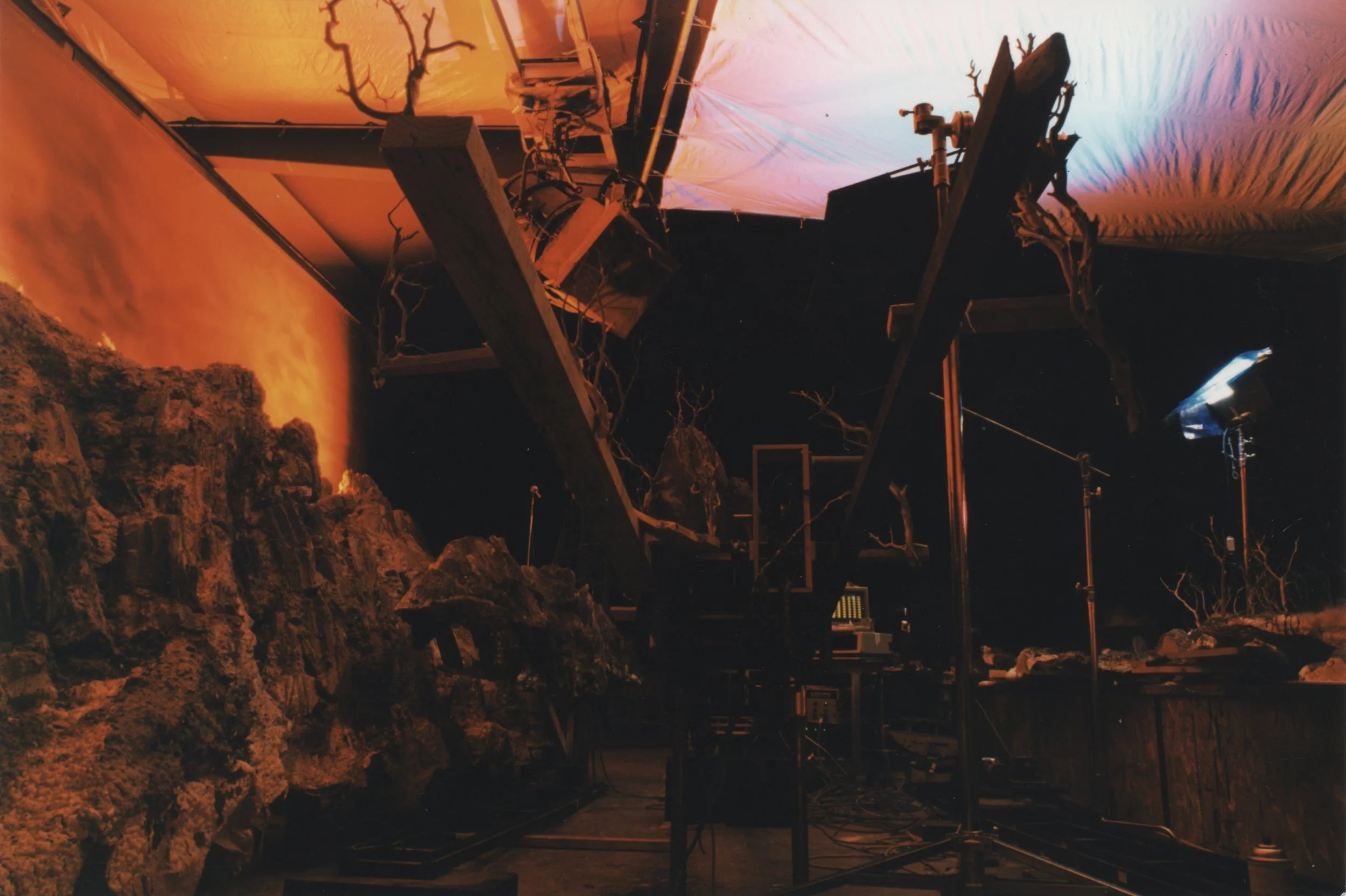
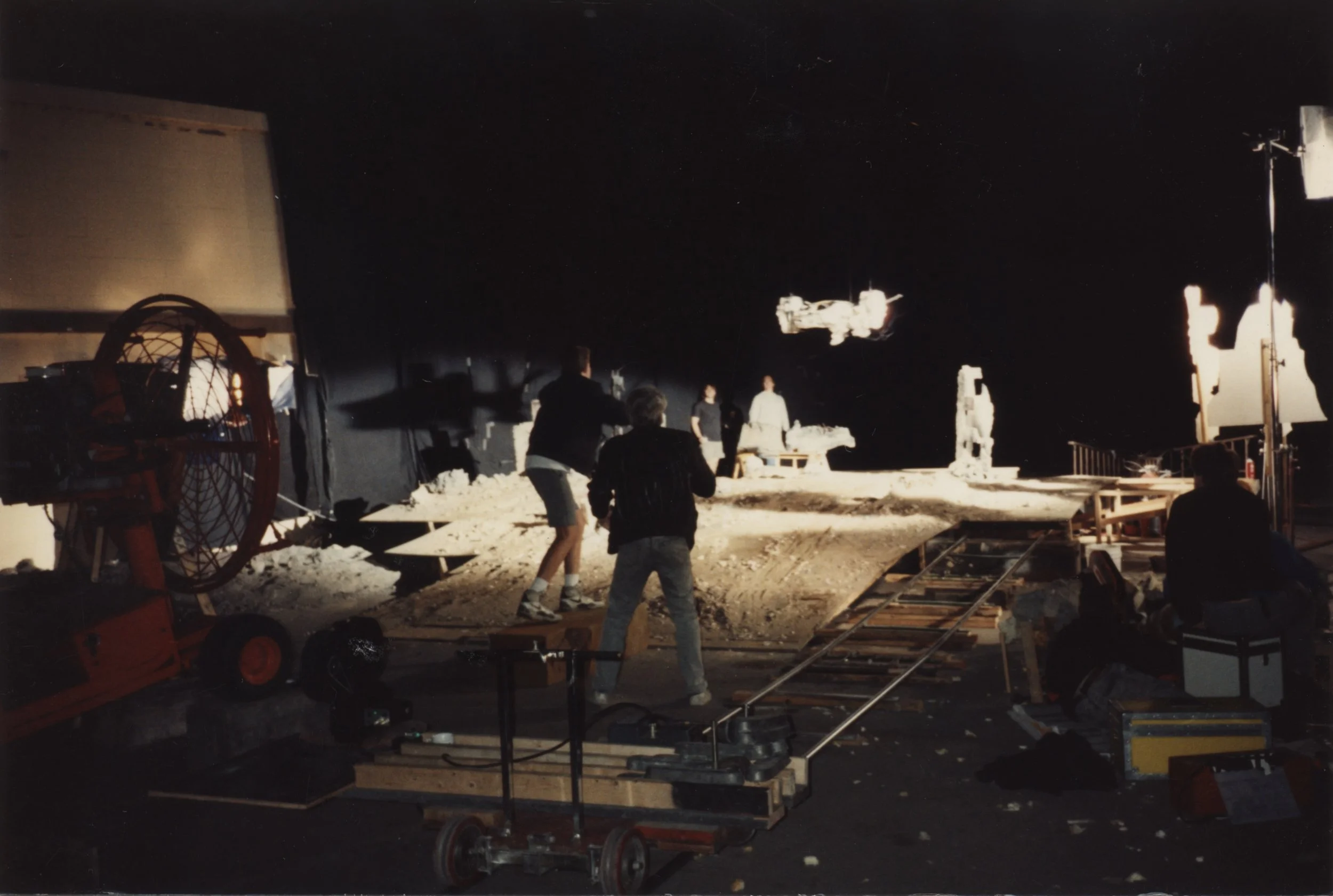
Christopher Lee Warren shooting miniatures on set for Megalopolis.
How did you get connected with Boots Riley?
I got a text message from [Roman Coppola]: “I’m going to hook you up with a friend of mine, his name is Boots Riley. He lives in Oakland. He would love to use Industrial Light & Magic because they're local to San Francisco, but they don't do miniatures anymore.” I Google [Boots] real quick, I want to know who I'm talking to. Then I stopped at “communist”—I don't need to know any more about this guy. I like him. [Boots and I] talked for about 10 minutes about I Love Boosters, and about an hour and 10 minutes of politics, and that's how our first discussion went.
When he brought you on for the project, did he have a fully conceptualized idea of what he wanted for the miniatures?
He did. They were already trying to get them made in Atlanta. [...] And then when I got a hold of Boots, they had hired me just to do one sequence that was all storyboarded. Then in the process of that, they're like, “Well, we don't know how to do the chase sequence. It's gonna be a million, million and a half dollar budget to do the chase sequence.” So I showed them all the buildings from DreamQuil, because I had already built them, and they were like, “Oh, I guess you're doing the chase sequence too.”
I was very unsure of myself. I hadn't done this type of stuff for decades. I don't think there's been a miniature sequence in a movie in more than a decade, maybe 15 years, the way that we just did the sequence in Boosters. It's a full-on scene: cut here, cut there, cut here, cut there, we're telling a story while we're traveling around.
Can you walk us through the craft itself?
In the past, it was all done by sculpting out of clay or foam, and then you would mold it and then put fiberglass on it. Nowadays, it starts with 3D printing. You print your parts, then they get sanded and assembled, and they get painted, aged, and put on the set.
It took us two and a half months to build everything, and took us about two months to shoot it. I did something that hasn't been done called Go motion. Most people don't know that when you're watching an image, there's a blur to it, because it's a 180 degree shutter—it's open and it's closed. If you're moving, when it's open, it’s not taking a still image, like stop motion. That's why people say stop motion looks jittery—it’s a still image, single frame, there's no motion in it, which makes it crystal clear just as if you're shooting a still. When you’re shooting regularly, even at 24 frames a second, images are not crystal clear because there’s motion in it and that means a tiny amount of blur.
Since film has stopped, there's been no way to sync up a digital camera to the motion control and shoot the blur properly, until Boosters. In Boosters, you can't tell the difference between my single-frame shots or the real frames. Because I shot Go motion, I was able to sync up a Nikon to the motion control so that it would expose the frame in the center of the move, and then it had the blur in it. I'm an expert at this, and I can't tell the difference.
You’ve worked in this field for four decades now. When you look back at your previous work, is there something you’re most proud of?
To be honest with you, I look back as far as Boosters, because you're only as good as your last project in this business, and I'm really proud of Boosters. Boosters was groundbreaking because of the amount of work that we did in miniatures. And when you do your job right, they go, well what was miniature?
Boots kept telling me, “Don't do it so good. People are not gonna know it's miniatures.” I'm like, “Dude, my whole life I've been taught to make it look real. And now you’re telling me not to make it look real.”
What gives you hope for the future of visual effects and miniatures?
Humanity. People. Have AI create a Boots Riley, have AI create an Alex Prager, and the way they think. It’s not going to happen.
Now that I've seen [I Love Boosters and DreamQuil], and now that I see the people, I’m not that concerned with it anymore. It’s going to be CGI on steroids, and CGI has always had its problems. So what if it's on steroids? It’s not real, and you feel it. You watch these miniatures, and it's real light, it's real texture. You know it's real. It's just small.
In your career you've worked with auteurs like Wes Anderson, Guillermo Del Toro and James Cameron. Do you have a favorite memory of working with them?
There’s so many of them. But I do remember one—nobody was there but myself. I was shooting [a scene for] Bram Stoker's Dracula. There’s one shot in there where Keanu Reeves is riding in a train car, and [out the window] is the Carpathian Mountains. And Dracula's eyes appear and disappear. I did that all practical, and I had to build the background plate. They took that background plate and put it as a rear-screen projection, because we didn't have LED then, and then Keanu Reeves was in front of it.
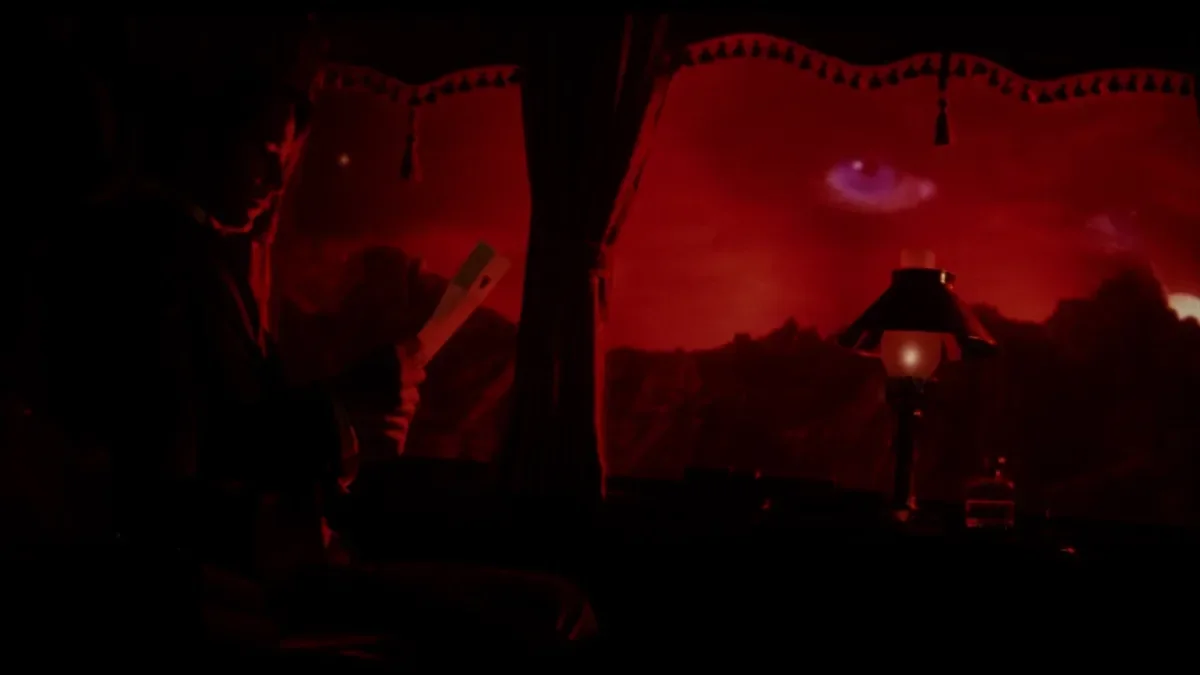
I'm sitting there shooting it by myself, probably 11 o'clock at night. It's in Burbank. All the lights are up. I'm doing a second pass, and a flashlight pops up in my shop, and I see [the light] going on the wall. I’m like, “Turn that fucking thing off!” It turns off. I’m like, “Who the fuck is that?” “Oh, it's Burbank PD, we just saw that the front door was open. We wanted to make sure you're okay.” And I'm like, “You motherfuckers ruined my shot. I have to start over.” They’re like, “We’re so sorry. We're so sorry.” It’s something that I remember—freaking a cop out, “We’re so sorry,” because they knew we did effects there.
And then the Future War sequence, shot number one for Terminator 2, we’re out at the [Kaiser Steel Mill in Fontana], and James Cameron came out that day, and I'm pushing my dad on the dolly, and James Cameron says, “Gene, let me operate this.” So I pushed James on the dolly, and he's riding it, and he stops and gets off and goes, “That was perfect. We're done with this shot.” And he walked away. I mean, [there’s] just little things like that that happened throughout my career.
The first Terminator, too—at the end of the movie, [Sarah Connor is] driving out into the distance, and they tilt up, and you see the lightning and some matte painting. And it ends the movie. Jim Cameron, [producer] Gale Anne Hurd, their secretary, my dad and I drive all the way out there. We're in the middle of the Mojave Desert. Pick a spot on the road. Jim loves it. We put scaffolding up, put a camera up. The jeep’s gonna drive up, we're gonna tilt up, and a cop pulls up next to us. “What are you guys doing?” My dad's like, “It’s my son's student film project. And we're just here to do something for my son's student film project.” And [the cop] is like, “Well, if that's the case, then if you just move the scaffolding over to the side, I'll let you still shoot.” So when you see the movie, the jeep’s offset.
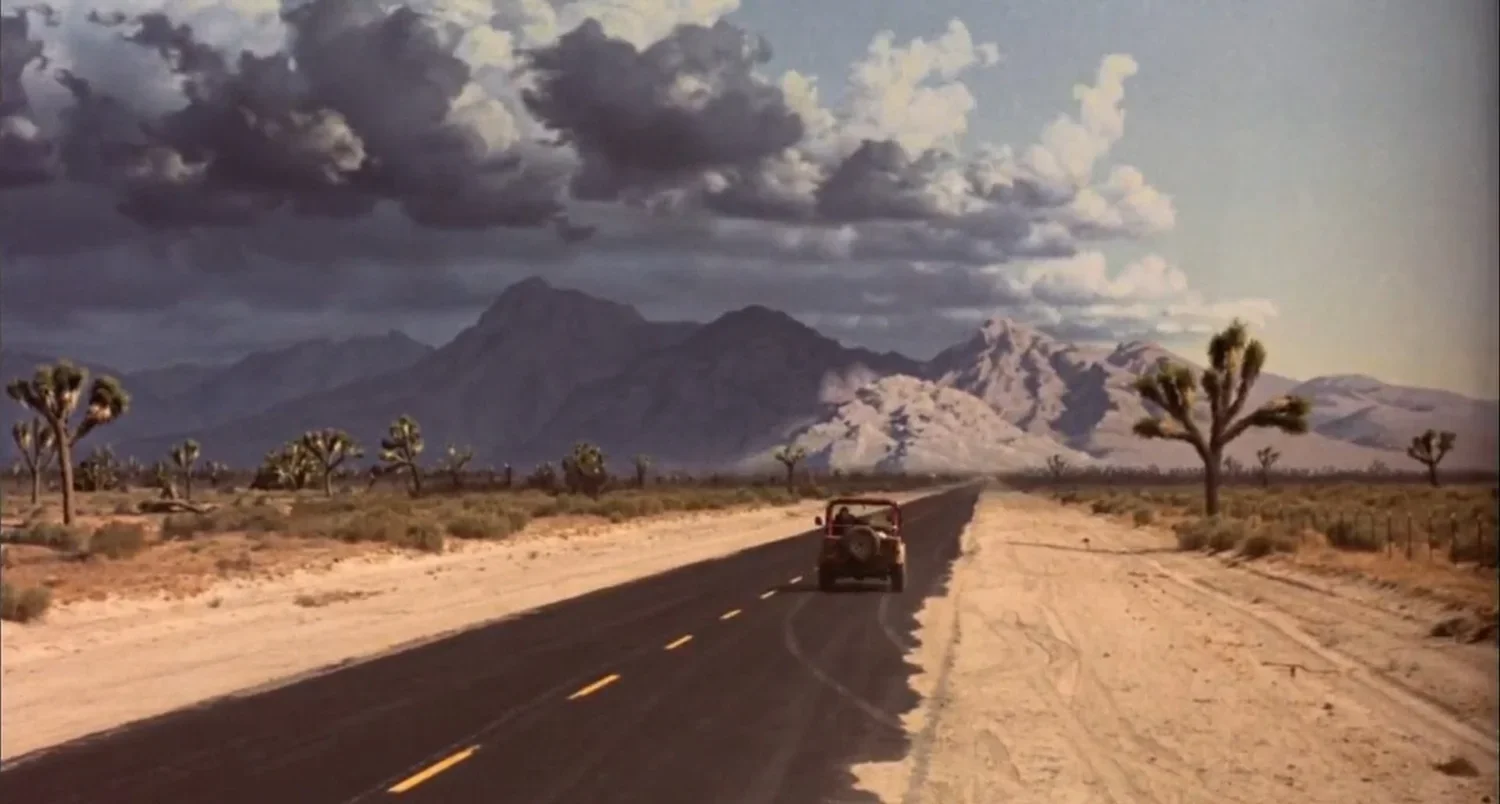
And I knew that at 18 years old, I wouldn't have quite something the same as that for the rest of my career. But that was a fun one. I thought I was going to jail, or I was getting a ticket.
But your student film made it big!
[Laughs] Yeah, a classic shot in Hollywood history. Literally, that's what he said: “My son's student film.” I wasn’t even in school!
If you enjoyed this article, please consider becoming a patron of Hyperreal Film Journal for as low as $3 a month!
Alix is the editor-in-chief for Hyperreal Film Journal. You can find her on Letterboxd and IG at @alixfm.