
Hope: A Pulpy Action Romp With Janky Effects and a Jankier Conclusion
South Korean director Na Hong-jin’s last film was a decade ago: the unyielding, ferociously downbeat exorcism classic The Wailing. Before that, Na Hong-jin had only two other feature films to his name as a director: The Chaser (2008) and The Yellow Sea (2010), but The Wailing was undoubtedly his career high point and ended up being one of the best-reviewed horror films of the 2010s internationally. If your only point of reference for his work is The Wailing in terms of tone, you need to recalibrate your expectations for what to expect from his latest film, Hope. To illustrate just how starkly different in tone Hope is to The Wailing, imagine if William Friedkin, fresh off directing The Exorcist, had decided to make Star Wars instead of Sorcerer.
With those expectations in mind, Hope represents some of the best action filmmaking that 2026 has produced so far, unapologetically a pulpy B-movie with a master craftsman operating the camera at all times as an eccentric cast of small-town locals deal with a monster terrorizing their town. However, at 2 hours and 40 minutes, Na Hong-jin struggles to keep Hope from falling apart at the seams due to its unusual pacing, janky digital effects, and a head-scratching conclusion, yet the sheer exhilaration of it all makes up for all of that and more.
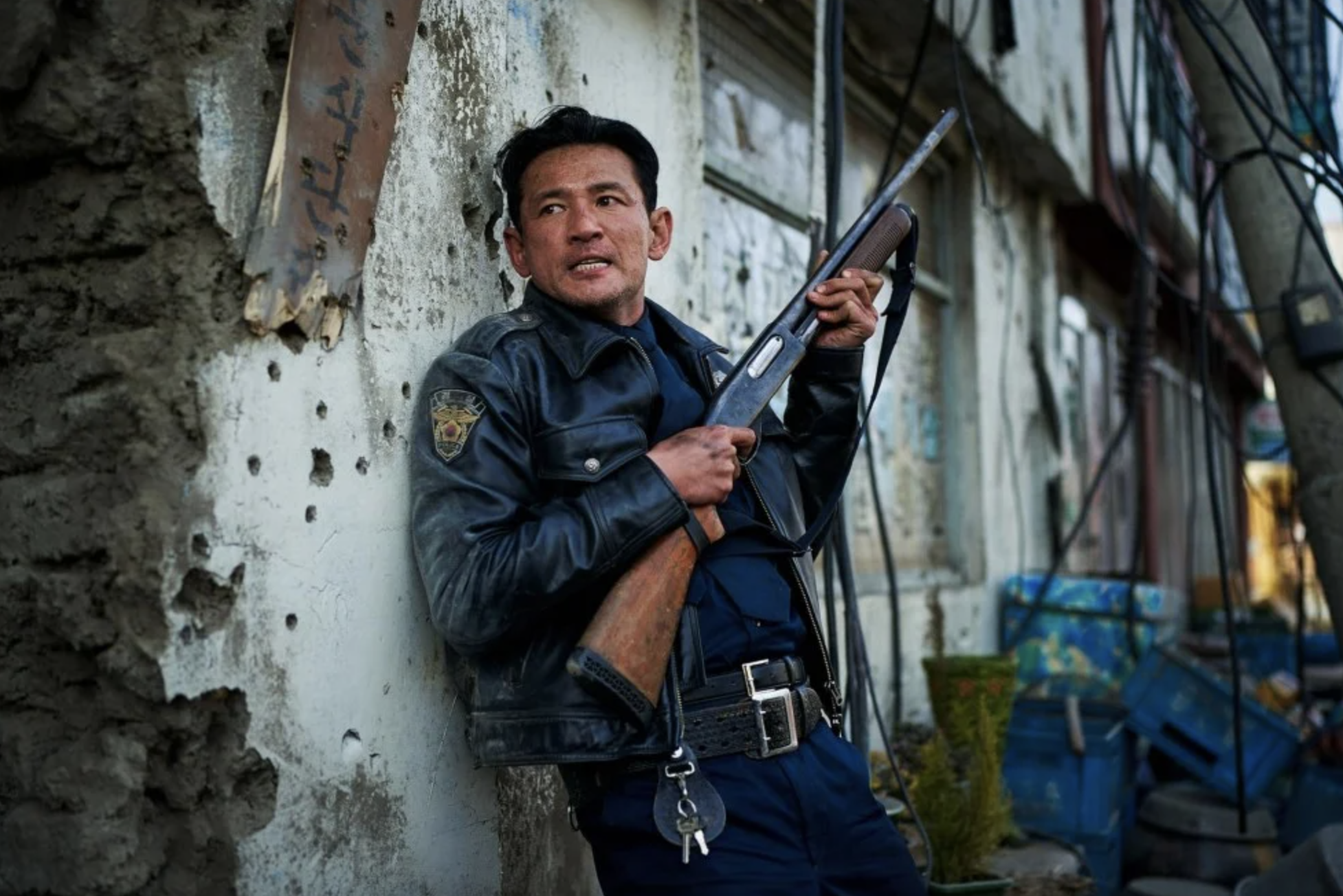
The first five minutes of Hope start quietly enough. The small South Korean town of Hope Harbor doesn’t have many residents beyond local business owners and a hodgepodge of oddball hunters who are hilariously overequipped for the usual animals they face. But local hunter Sung Ki (Zo In-sung) finds a dead cow with massive claw wounds, leading him to call the local police chief, Beom Seok (Hwang Jung-min). As the chief returns to Hope Harbor to warn residents that a mysterious animal is on the loose, Sung Ki takes his hunting buddies into the nearby wilderness to try to track the beast. It doesn’t take long for the situation in Hope Harbor to go completely sideways as an unknown creature utterly devastates the town, ripping through walls, cars, and human beings at an astonishing rate. As Beom Seok desperately runs around Hope Harbor trying to figure out what on Earth is going on alongside his sharpshooting deputy, Sung Ae (Hoyeon), Sung Ki’s hunting crew slowly but surely begins to realize that the creature they’re hunting is not of this world.
The main trio of performances from Hwan Jung-min, Zo In-sung, and Hoyeon is each a ton of fun in their own way, even if their dialogue veers into intensely silly territory more often than not. The sheer amount of humor in Hope is its most surprising feature, but if you can get on its wavelength, the jokes work for the most part. One particular sequence where Sung Ae interviews a witness who claims he saw more creatures is one of the most unexpected sequences in the movie in terms of how comedic it becomes, even as other attempts at humor are less successful.
As unexpected as the jokes are, the oddest part of Hope is that story-wise it feels like a spiritual remake of the alien invader films of the American low-budget filmmaker Don Dohler, who essentially made the same movie four times in the form of The Alien Factor (1978), Nightbeast (1982), Galaxy Invader (1985), and Alien Factor 2: Alien Rampage (1999). All four films are broadly about local yokels encountering aliens of varying hostility and immediately responding by trying to either kill them or exploit them for money. Dohler’s films are notoriously slap-dash in how they were made, but the parallels between them and Hope are hard to ignore if you’re familiar with Dohler’s work, particularly how the characters in his films usually shoot first and ask questions later, and how there’s always one piece of human trash who dooms everyone involved.
Hope’s entire story structure is built around the idea of shooting first and asking questions later. The first hour or so is a relentless assault as Beom Seok endlessly runs around Hope Harbor trying to even get a glimpse of the creature he’s dealing with, and once the assault concludes, the rest of the movie is spent trying to figure out what the hell happened and why this creature attacked Hope Harbor in the first place. It’s an odd structure, because Hope ends up being incredibly exciting at the outset, but slows down considerably with nearly 90 minutes still on the clock. There are more incredible action set pieces as the third act falls into place, but the middle of the film slowly dolls out a series of reveals before the momentum restarts.
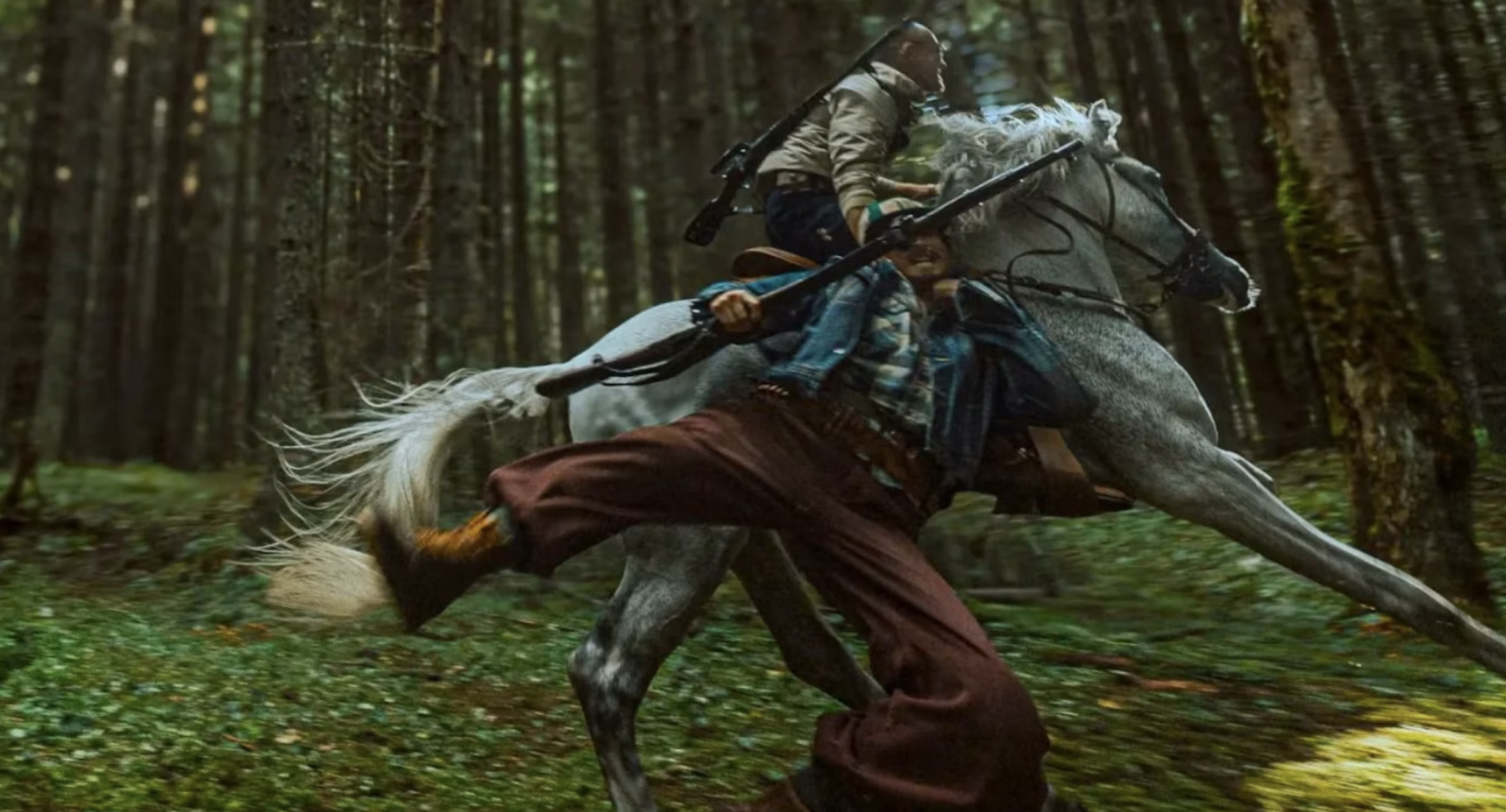
The first hour is undoubtedly the highlight of the film, especially how cinematographer Hong Kyung-pyo’s camerawork has a video-game-esque quality where the lens seems to move at a specific distance from characters or objects. The camerawork on a few car chases is absolutely stunning, and a sequence much later in the film involving horses is even more dynamically shot. The daylight-soaked ruined Hope Harbor assault evokes the infamous opening sequences of Leon Kennedy running around a Spanish village in Resident Evil 4 at times, though the video-gameiness of Hope does extend into what will make or break the film for potential viewers well before the end of the film: The digital effects.
Digital creatures with realistic skin are notoriously difficult to render, and the design work on the creatures in Hope is solid, as evidenced by some gorgeous physical props of the creatures used for a handful of scenes. Where the digital effects crumble is in their fidelity, there is simply no way to ignore how awful the creatures look in certain shots. What makes the digital effects stand out even more is how much gorgeous location and exterior shooting Hope commits to throughout its entire runtime, made even more glaring by the aforementioned choice to shoot in daylight. Combine that with the fact that the creatures are performed via motion-capture by recognizable actors like Michael Fassbender, Alicia Vikander, Taylor Russell, and Cameron Britton in a few scenes, and the lack of fidelity stands out even more.
However, there is one aspect of the digital effects that is excellent, which is the animation on the creatures themselves. Their movement is uncanny, dropping frames as they leap or snap at people around them. There’s also a great attention to detail in how the creatures destroy physical props that interact with the real actors, which lends a much-needed weight to the variety of action set pieces.
If you can get past the janky fidelity of these digital effects, there is one final hurdle to clear, the final stretch of Hope’s story. As audacious as Hope’s action filmmaking is, its blatant attempt at sequel setup almost outdoes any other wild choices the movie makes, including a mid-credits scene. The end result is that Hope, despite its monstrous runtime, doesn’t feel like a complete narrative. There’s a more charitable interpretation that can be lent to the ending in how its characters realize how much bigger and weirder their predicament is, but director Na Hong-jin has announced his intention to make a trilogy of films. There had to be a more graceful way to work that intention into Hope’s structure, but even as is, Hope is still one of the most entertaining movies of the year by a massive margin.
Despite its wildly uneven digital effects, the in-camera filmmaking is some of the best in the world right now and designed to be enjoyed in a packed theater with a rapturous crowd. Hope is absolutely worth rolling the dice on, assuming you can deal with its caveats when the time comes.
If you enjoyed this article, please consider becoming a patron of Hyperreal Film Journal for as low as $3 a month!
Jacob is a writer based in Austin, TX who loves giving infamous movies a chance, for better or worse. You can find him on Letterboxd at @Jacob_Ethington and on Instagram at @midwest_bummer.