
“A Pure Person: The Sonic Landscape of Lim Giong” Retrospective at BAM
(Or, how I spent six days watching ten films and contemplating memory, my mortality, and the passage of time in New York City)
From September 18-24, 2026, the Brooklyn Academy of Music (BAM)’s Rose Cinemas presented the retrospective series “A Pure Person: The Sonic Landscape of Lim Giong.” Guest programmed by Frank Yan, Co-Director of Programming for CineCina and Co-Founder at Soundtrack Magazine, the series (per its webpage) “follows Lim’s sonic journey from Taipei to the mainland and the borderlands beyond.”
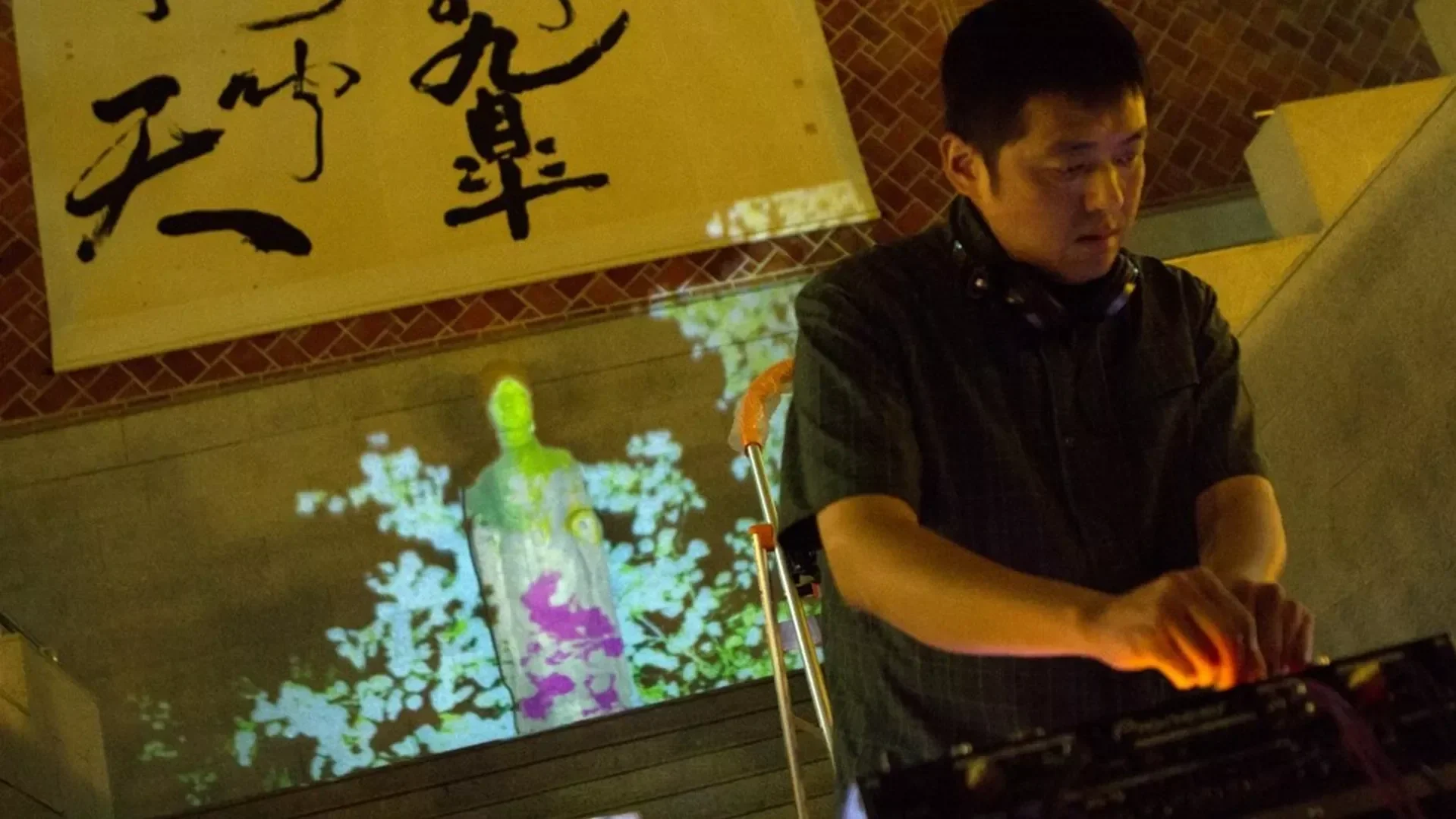
Musician and composer Lim Giong
Lim Giong: An Avatar of Taiwan’s Emerging Cultural Identity
Taiwanese composer Lim Giong began his career as a rock n’ roll musician, obtaining a job as a production assistant after entering the 1988 Wooden Ark Folk Song Contest with his own Taiwanese-language song (notably, all of the other contestants sang in Mandarin). He released his immediately-successful debut album Marching Forward two years later, in 1990, when he was 24 years old.
Lim originally sang exclusively in the Taiwanese Hokkien language (which the postwar Chinese Nationalist government had historically suppressed the use of in official settings, schools, films, and radio and television broadcasts in favor of Mandarin) about Taiwanese life and society, making his increasing fame in his home country inextricable from its evolving sociopolitical landscape. Martial law in Taiwan (having been in place for 38 years) was lifted in 1987, only three years prior to Marching Forward’s release, and the country’s transition into a democracy began in 1988–bringing with it an increased emphasis on Taiwanese nationalism and, by extension, promotion of local artists. One doesn’t have to look far to find poignant reflections written by Taiwanese commenters on Lim’s music videos about the importance of his work at this moment in time; his unapologetic embrace of his culture as well as his youthful energy and fresh sound, for many, captured the feelings of hope as well as trepidation that characterized this period of change in the country.
Perhaps it’s no surprise, then, that Lim’s film music career was also heavily intertwined with Taiwanese cultural shifts. His work in this realm began when he—along with eventual collaborator, famed Taiwanese New Wave director Hou Hsiao-hsien—contributed the song “A Soundless Place” to the soundtrack of Hsu Hsiao-ming’s Dust of Angels (1992), a now-cult classic that depicts disaffected youth turning to gang membership and violence against the backdrop of Taiwan’s changing economy. Lim also makes a cameo appearance performing a Hokkien song, “Don’t Be Afraid, Everyone” alongside fellow Taiwanese musician Lo Ta-yu in the movie itself. “Don’t Be Afraid, Everyone” is Lo’s cover of a popular Cantonese-language song he co-wrote about the then-impending handover of Hong Kong to the People’s Republic of China, “Queen’s Road East.” For the cover version featured in Dust of Angels, he re-tooled the lyrics to speak to Taiwan’s democratization, calling upon its citizens to play an active role in shaping the country’s future.
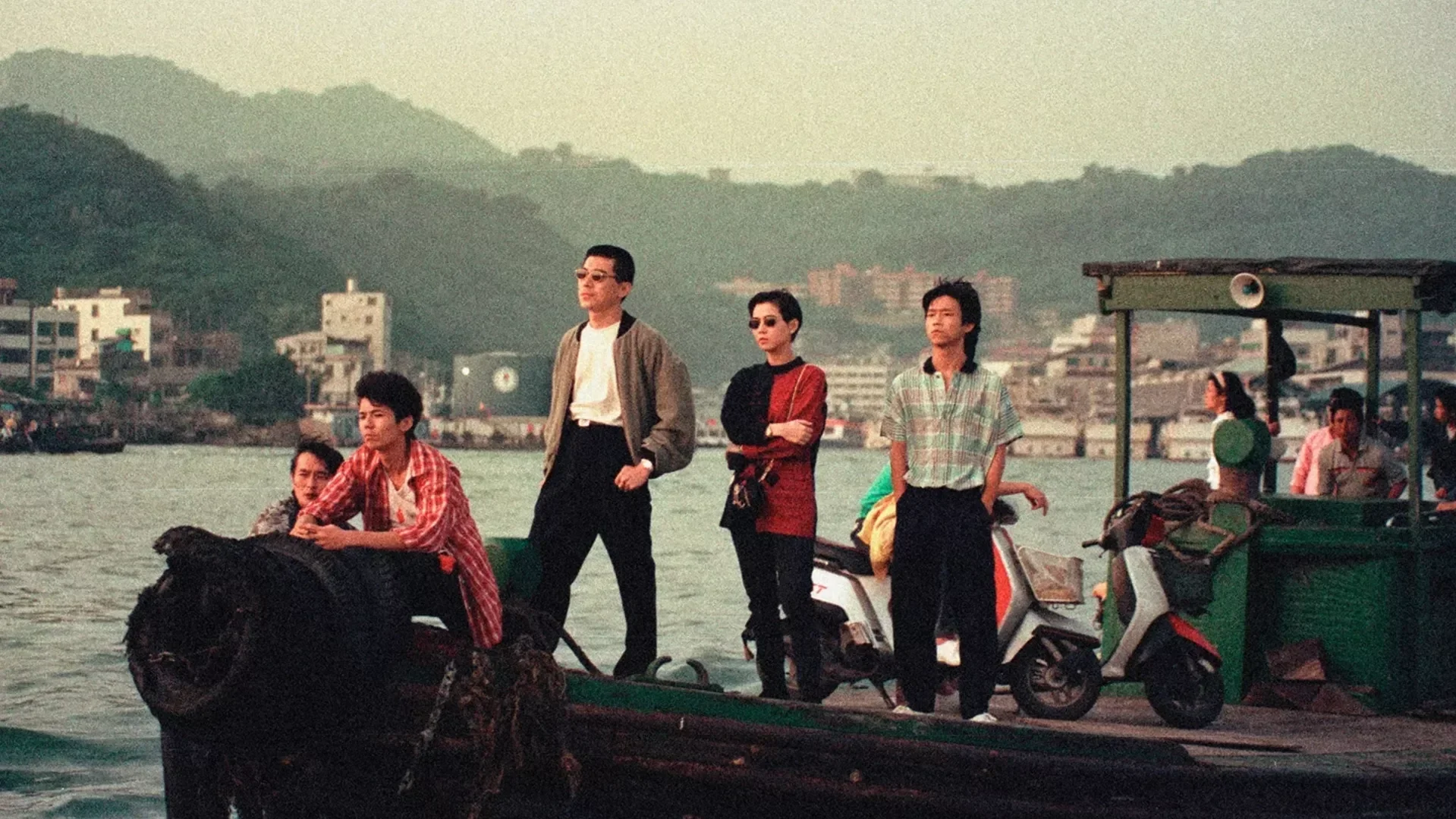
Still from the film Dust of Angels
Following this film debut, Lim began his longtime collaboration with Hou, appearing as an actor in 1993’s The Puppetmaster and 1995’s Good Men, Good Women, the last two installments in Hou’s “Taiwan Trilogy.” In 1996, Lim both acted in and contributed to the soundtrack of Hou’s Goodbye South, Goodbye (incidentally, another film about gangsters in Taiwan) which won him a Golden Horse Award for Best Original Song. And in 2001, he experienced his breakout success as a film composer with his work on Hou’s Millennium Mambo, winning the Golden Horse for Best Original Soundtrack.
“A Pure Person” Retrospective
That’s where I come in: I was introduced to Lim’s work via his soundtrack for Millennium Mambo (one of my all-time favorite films, in no small part due to its music). So, though I’m based in Chicago, my interest was immediately piqued when I heard about the retrospective series at BAM, and I quickly made plans to attend. In addition to getting another opportunity to see Millennium Mambo on the big screen and an excuse to visit New York City (two things I’m always happy to do), I was excited for the chance to watch another, rather difficult-to-see favorite, Pink Floyd: The Wall—programmed for the retrospective by Lim himself, who cited it as a major influence—in a theater, along with eight other movies I’d never seen but about which I’d heard great things.
To say I had a wonderful time is an understatement. Yan did an excellent, intentional job of selecting films for the series, resulting in a slate that both traced Lim’s career trajectory in cinema and found plenty of thematic overlap and dialogue between its entries.
The series kicked off, fittingly, at the start of Lim’s career with Dust of Angels. This was the film Yan told me he was most excited to program, as it’s rarely screened; this showing was its New York premiere. From there, the lineup included (in the order I saw them):
Hometown Boy - Hung-i Yao (2011)
Pink Floyd: The Wall - Alan Parker (1982)
The Assassin - Hou Hsiao-hsien (2015)
Caught by the Tides - Jia Zhang-ke (2024)
City of Jade - Midi Z (2016)
Jinpa - Pema Tseden (2018)
Kaili Blues - Bi Gan (2015)
The World - Jia Zhang-ke (2004)
Millennium Mambo - Hou Hsiao-hsien (2001)
Even those with only a passing familiarity with Asian film will recognize this list as something of a who’s-who of many important and influential modern-day Asian directors. What viewers may be less aware of is the fact that the majority of these filmmakers are part of the same cinematic lineage; they are, for the most part, contemporaries, and sometimes collaborated on each other’s projects (for example, Dust of Angels director Hsu was deputy director on Hou’s landmark autobiographical film The Time to Live and the Time to Die and Hou was a produceron Hsu’s Dust of Angels). Bi Gan, Midi Z, and Hung-i Yao are part of the next generations of Asian directors, mentored by many of the older gen of filmmakers who appear on this lineup.
Given this, it’s no surprise that many of the same themes and technical choices crop up in films across the slate. And perhaps the most emergent theme in the lineup was that of changing times—that same mix of nostalgia for the past and nervous excitement for what lies ahead that characterized Lim’s early music and the spirit of the post-martial law zeitgeist in Taiwan.

Painter Liu Xiaodong in Hometown Boy
Marching Forward
While most of the films in the series are set contemporaneously with the years they were made, even the single period piece selected, Hou’s The Assassin, meditates heavily on the advent of new eras and their accompanying anxiety. It seems that, whether coming of age at the dawn of the twenty-first century (Millennium Mambo), attempting to find connection during the COVID lockdowns era (Caught by the Tides), or navigating alliances and power struggles in Tang dynasty China (The Assassin), humans are not immune from the existential dread (or at least reflection) that often stems from the passage of time.
Hung-i Yao’s 2011 documentary Hometown Boy grapples with this topic quite directly. A spiritual cousin to films like Agnés Varda’s The Gleaners and I or Faces Places, the film follows famous Chinese figurative painter Liu Xiaodong as he returns to his rural hometown of Jincheng after 30 years away to visit his friends and paint them. Hometown Boy features many talking-head interviews wherein the artist bittersweetly reflects on how much (yet how little) the community has changed in the time he’s been gone. As he puts it, “My eyes are wide open looking at the past.”
Amidst Liu’s musings on the nature of art, music, cinema, place, and time are takes on the contrast between his chaotic, urban life (he characterizes cities as being so busy that “even greetings become meaningless,”) and what he calls “the peaceful contentment of countryfolk” like his friends in Jincheng. It’s clear as we watch him paint and hear him speak about his hometown that Liu has abundant affection for this place that shaped him, even as he feels set apart from it by his choice to leave.
Millennium Mambo is another film from the series that meditates heavily on the passage of time, the often alienating (though often equally freeing) experience of living in an urban environment, and a sense of wistfulness for a more provincial existence. Unlike Hometown Boy, though, Millennium Mambo tackles this topic from within a city setting—specifically, Taipei, Taiwan’s capital city and home to about one-third of the country’s population.
The film follows episodes in the life of early-twentysomething protagonist Vicky (a radiant Shu Qi) in the year 2001, as narrated by an older Vicky speaking from the year 2011. Underemployed, without a college education, and stuck in a cyclical, on-and-off relationship with her abusive boyfriend Hao-hao (Duan Chun-hao), 2001 Vicky escapes her day-to-day realities in the lively Taipei nightclub scene. Over the course of these nightlife escapades, she meets three people who may be able to help her change her situation: older gangster Jack (Jack Kao), who takes a protective tack toward Vicky and tries to help her get a job; and the Takeuchi twins (Jun and Ko Takeuchi), originally from Hokkaido, Japan, who invite Vicky to get away from Taipei for a visit to their remote hometown of Yubari in the snowy mountains.
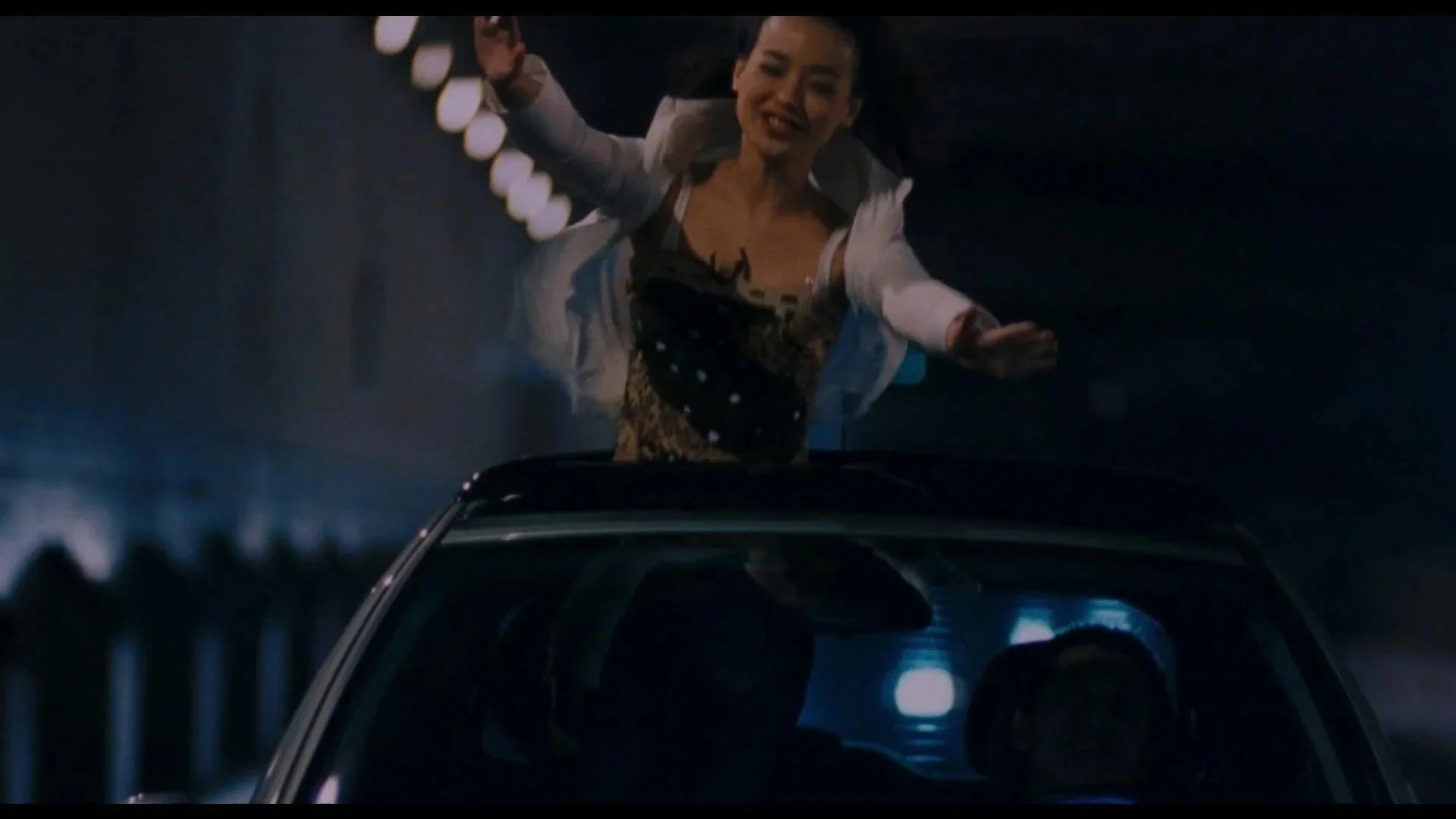
Vicky (played by Shu Qi) in the film Millennium Mambo
Shu Qi in Millennium Mambo
Despite its depictions of domestic violence as well as the rigor of city life, Millennium Mambo also contains sequences of absolutely transcendent urban beauty (scored to perfection by Lim): Vicky standing with her upper body sticking out of the sunroof of Jack’s car, hair blowing in the wind, during one of their night drives; Jack and his fellow gangsters taking a rest in the sauna; Vicky and her friends dancing in crowded, neon-saturated clubs to pulsing electronic music. Alongside these are equally gorgeous scenes set in Yubari: Vicky and the Takeuchi twins frolicking in the heavy snow, admiring Yubari’s “Road of Cinema” by the stillness of night, and helping out at the Takeuchi’s 90-year-old grandmother’s inn.
Its caring, resonant depictions of urban and rural living make Millennium Mambo a nuanced look at both. Neither Yubari nor Taipei is posited as superior to the other—which, in a way, feels like a commentary on the difficulty of reconciling one’s inability to live in two worlds simultaneously. No matter where you are, yearning will exist…but so will moments of profound loveliness. One day, Vicky’s ten-year-hence voiceover seems to promise, it will all take on the nostalgic haze of memory.
It’s appropriate, then, that the title track on Lim’s hit debut album, “Marching Forward,” centers on the narrator leaving his hometown to move to Taipei—singing about the anticipation, excitement, and prospect of failure that comes along with doing so. Given the major transformations that Taiwan was experiencing at the time of the song’s release, it’s easy to see why “Marching Forward,” about being on the precipice of leaping into the unknown, exciting future, resonated so strongly with so many Taiwanese people.
An excerpt from the (roughly-translated) first verse of the song, which I’ll let speak for itself:
“The train is slowly pulling away.
Goodbye to my hometown and relatives.
Goodbye, dear parents.
Farewell to my friends who have arrived.
I'm going to Taipei to work hard.
I've heard that everything is so empty there.
My friends laugh at me, calling me a daydreamer.
No matter what, I'll walk my own path.
Oh! Goodbye! Oh! Nothing's scary.
Oh! Goodbye! Oh! Moving forward.”
Conclusion
It felt all too perfect to cap off my retrospective experience with a viewing of Hou’s Millennium Mambo: the movie that put Lim on the map as a film composer as well as one that so beautifully captures that heady mix of excitement and apprehension about a new era.
This faint, persistent optimism is perhaps best captured in the continued lyrical refrain of “A Pure Person,” the iconic song of Lim’s from Millennium Mambo that lent the BAM series its name:
“Life has hope: a breeze soft like cotton.
A pure person
Life has hope
A pure person
Life has hope.”
Many thanks to Frank Yan for discussing the series with me for this piece, as well as to my dear friend Josh Martin for providing helpful notes on historical context.
If you enjoyed this article, please consider becoming a patron of Hyperreal Film Journal for as low as $3 a month!
Liz is a Chicago-based film enjoyer, crocheter, and Hyperreal Film Journal editor. Find more of her thoughts on movies (mostly those with killer soundtracks) @espieck on Letterboxd.