
Indie Meme ‘26: An Unquiet Mind
Approximately 1 in 40 adults currently has Obsessive-Compulsive Disorder (OCD) – over 3 million in the United States alone. The latter is one of the earliest statistics shown in Rachel Immaraj’s documentary An Unquiet Mind, which had its Texas premiere at Indie Meme Film Festival on April 23, 2026.
The stats I outlined above aren’t just abstract numbers to me; I’m one of those 3 million U.S. adults. So when I saw An Unquiet Mind on Indie Meme’s festival screening slate, I was immediately intrigued. OCD is a widely misunderstood disorder as-is, and the film, in addition to raising awareness about the condition generally, promised to explore some of the more “taboo,” under-discussed OCD subtypes. It’s heavy, challenging subject matter, but that doesn’t stop An Unquiet Mind from tackling it holistically and head-on. The result is a deftly executed, empathetic documentary that packs a punch with each of its 76 minutes.
Though An Unquiet Mind cites data about OCD’s prevalence and impact throughout its runtime, the film doesn’t rely on this information alone to get its message across. Instead, it wisely makes the realities of OCD personal by focusing on the lived experiences of two people with the disorder: Vinay, a community organizer in New York City, and Natasha, a California-based mother of two.
These two subjects have distinct journeys with OCD: Vinay traces his back to religiously rooted obsessions and compulsions he experienced in childhood, while Natasha had an abrupt onset of symptoms in adulthood. Vinay primarily experiences what is known as Harm OCD (marked by intrusive thoughts of others being hurt); and Natasha, Post-partum OCD and Pedophilia OCD (both of which manifest as unwanted thoughts about children – her own and others – being harmed, by her or by other perceived dangers).
But despite the differences in how their OCD presents, Vinay and Natasha’s experiences are shown to overlap in key ways, to which most anyone with OCD can relate: minds racing with an unending barrage of upsetting images and ideas; countless hours lost to performing and re-performing compulsions in an attempt to quiet the noise; feelings of shame and isolation; the metastasization of simple rituals into an all-consuming mental weight that makes it impossible to live life normally. In their interviews, Vinay and Natasha describe the times that their OCD was at its worst in grim, evocative terms: Vinay likens it to having forty to fifty TV screens in his brain constantly screaming at various volumes; Natasha calls it a “disease of doubt” and relays that the contrast between her dark thoughts and her outward presentation caused her to feel as though she was two different people at all times.
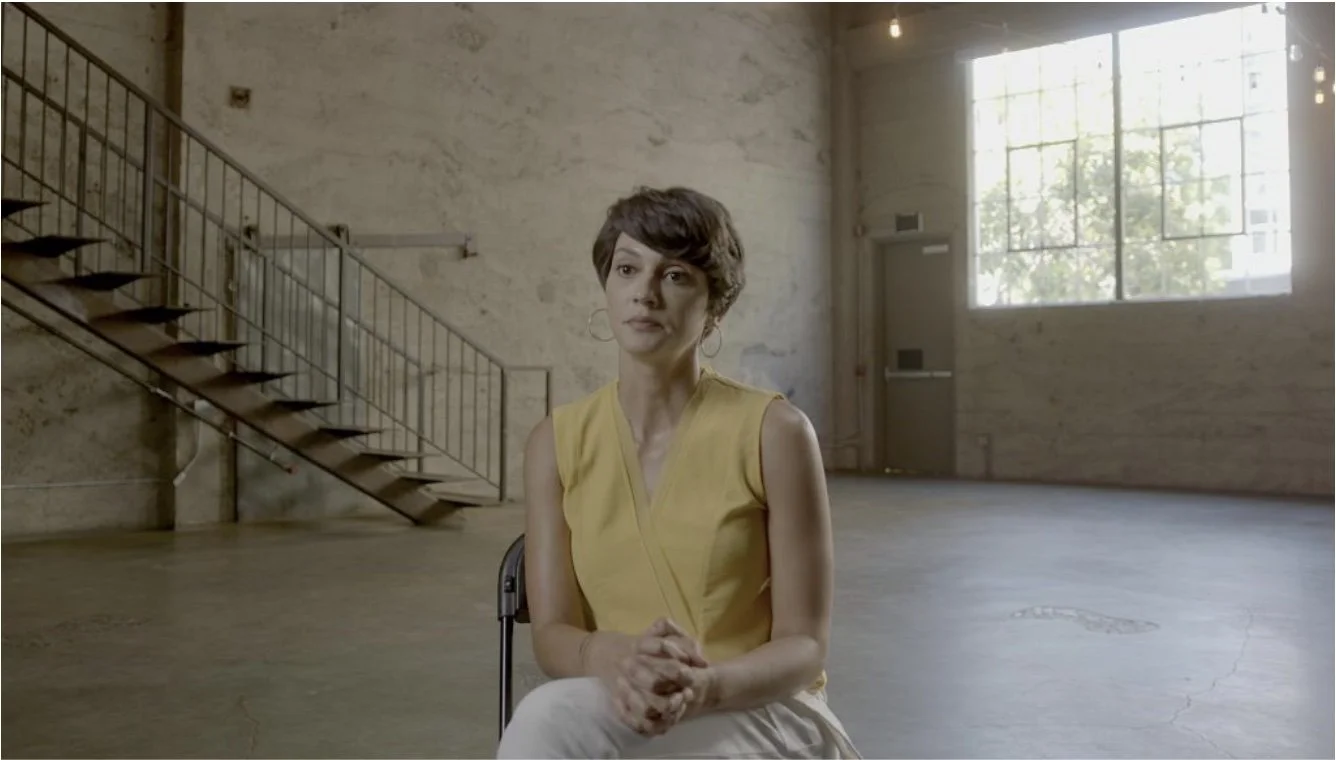
Interspersed throughout the descriptions and depictions of the pair’s experiences are clinical insights about OCD and its subtypes (sometimes accompanied by visuals) from psychology professionals. These asides provide helpful context about the condition for viewers who may not be familiar with the mental mechanics that underpin the states of mind Natasha and Vinay talk about.
Simply presenting these testimonials would have been effective in itself, but An Unquiet Mind goes a step further by making clever use of filmmaking techniques to provide a glimpse inside the mind of a person with untreated OCD. The relentless nature of intrusive thoughts and mental images is conveyed via rapid-fire montages of clips and repeated, overlapping dialogue. Beautifully composed shots of Natasha and Vinay standing alone among their surroundings (Natasha on a beach at night, Vinay on an empty subway car) showcase the isolation they felt from the world around them as their illnesses progressed. These choices make the viewing experience a visceral one, giving the audience a small taste of the wearying realities under discussion.
An Unquiet Mind also doesn’t shy away from sharing the eventual toll OCD can take on those who have it. Vinay self-medicated with alcohol and self harmed; Natasha became almost unable to function. At their lowest points, both of them (as well as, it’s revealed about two-thirds of the way through the runtime, director Immaraj herself) dealt with suicidal ideation because of their condition. They’re not alone – the film shares a statistic from Comprehensive Psychiatry that at least 1 in 10 OCD patients attempts suicide in their lifetime.

But, the film emphasizes, there are treatment options available for those with OCD – though it also discusses barriers to accessing this care. One of the most significant obstacles? Not knowing one’s symptoms constitute OCD at all. Natasha and Vinay struggled for years before finding the help they needed (Natasha for six years, Vinay for nineteen). They credit this in part to coming from cultural backgrounds where mental health wasn’t discussed openly; also to blame are societal misunderstandings of what OCD is and how it manifests (fueled by inaccurate media representations, some of which An Unquiet Mind shows, wherein the condition is treated as a harmless personality quirk and/or played for laughs).
Implicit in this conclusion is a call for more nuanced depictions of OCD – and in that respect, An Unquiet Mind absolutely leads the charge. During the post-film Q&A, Producer Kovid Gupta shared that the filmmakers deliberately sought out subjects who had stigmatized, lesser-known OCD subtypes for the documentary. (A nice touch on Indie Meme’s part was bringing in a local licensed clinical psychologist, Dr. Vagdevi Meunier, to moderate the Q&A.) In spotlighting these particular OCD perspectives and encouraging empathy and understanding for them, the film is an excellent, well-rounded addition to the existing body of knowledge about the disorder.
Also during the Q&A, Gupta told the story of how he met Immaraj when both were students at the University of Texas at Austin. It wasn’t until years later that the two discovered they had an OCD diagnosis in common, which is ultimately what inspired them to make An Unquiet Mind. I spoke to him in the lobby after the screening, where he summarized their motive – and in doing so, neatly encapsulated a throughline of the film – when he said, “If we don’t tell our stories, who will?”
Find more information and resources about An Unquiet Mind and OCD treatment on the film’s website, AnUnquietMind.com.
If you enjoyed this article, please consider becoming a patron of Hyperreal Film Journal for as low as $3 a month!
Liz is a Chicago-based film enjoyer, crocheter, and Hyperreal Film Journal editor. Find more of her thoughts on movies (mostly those with killer soundtracks) @espieck on Letterboxd.