
AFS Doc Days '26: Closure
In 2023, Daniel Dymiński’s son, Krzysztof, went missing near Poland’s longest river, The Vistula. He has been looking for him ever since. Daniel spends his days and nights scouring the river on his skiff with the desperate hope that his lost teenage son will turn up. It’s an all-consuming endeavor that worries those closest to him. Director, Michał Marczak, follows Daniel on this search in his most recent documentary, Closure. It’s a beautifully shot and tragically told story of one man's singular obsession with finding out the truth about what happened to his son, no matter how impossible the odds of that happening seem. Marczak shoots the film with such a tenderness and intimacy that the audience feels like they are right on the river with these two men, forever searching for something to bring the titular “closure” Daniel so desperately needs. It’s a tough watch, but ultimately a rewarding one because of the film’s unflinching focus on a father who refuses to give up hope, no matter what that costs.
The movie begins well after Krzysztof has gone missing and the authorities have mostly ceased any kind of active search for him. Daniel, and the occasional sympathetic family member, are the only ones still trying to find him. While no one knows exactly what happened to Krzysztof, there is heavy speculation that he took his own life by jumping off a bridge. Closure deals heavily with the theme of teen suicide and the toll that being chronically online takes on today’s young people. It’s heavy and broad subject matter that the film is still able to handle carefully by focusing so intently on Daniel’s unique experience with it. He and his endlessly patient wife suspect that their son jumped off a nearby Vistula bridge, but there is no conclusive evidence to support that, because the bridge’s CCTV camera cut away from Krzysztof right before he disappeared and was never seen again. It’s agonizing to watch these parents speculate about all the possibilities of what could have happened since there is no hard evidence to support their theories. All they can do is wonder and hope something substantial turns up. So, Daniel spends his days on the river, searching for signs of his son and thinking out loud about how he could have possibly prevented this from happening.
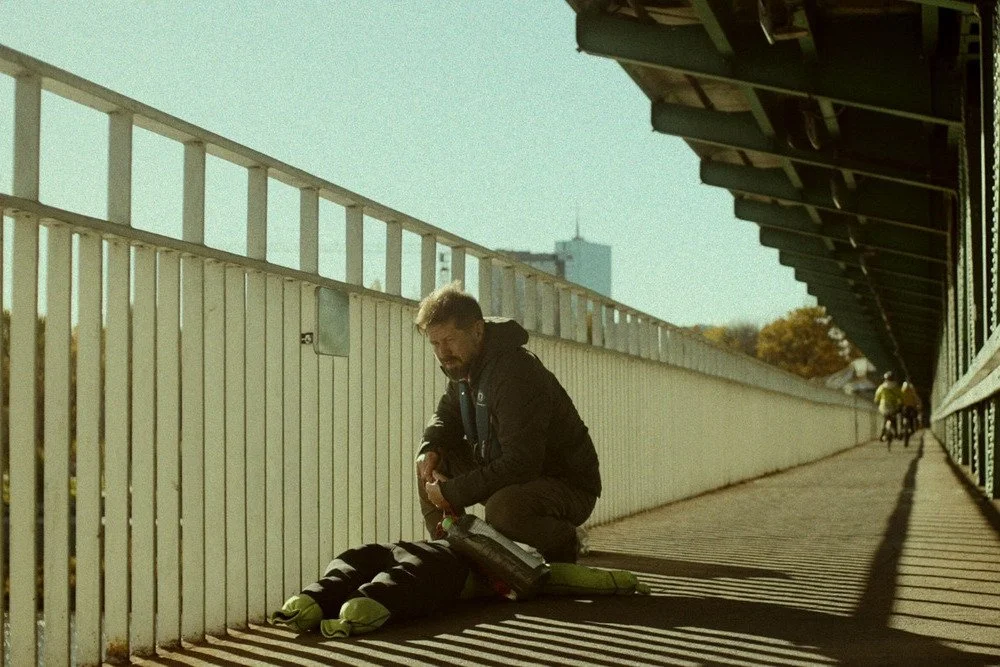
Despite his depressed state, Daniel makes for a captivating subject of the movie. He is tall, handsome, stoic but also intelligent, resourceful, introspective and kind to those around him. The film hints that his son’s disappearance has caused a great change in him that makes him a more emotionally intelligent person. Still, Daniel laments that this change in him has come too late, because he didn’t give his son the love he needed when he was around. Daniel is haunted by all the ways he didn’t show his son compassion and attention and instead buried himself in his work and “chased money.” So not only is Daniel grieving his son, but also grieving the relationship he thinks they could have had, had he not been so devoted to work. Now he spends his days on a huge, lonely river, haunted by all the ways he didn’t show up for his son when he needed him most. Marczak keeps the camera extremely close to Daniel as his subject talks openly about how this loss has devastated him and his family. There is clearly a deep bond between the filmmaker and subject because we get to know him so well. Daniel lets Marczak into his home and just lets him film him laying on the ground, exhausted by another day of unsuccessful searching. The bond between these two men is clear whether they are at home or out on the river talking about their lives. Daniel trusts Marczak and Marczak wants for Daniel to find peace.
As we get to know more about Daniel and his son, the film becomes less about finding a single person and more about learning to live with the things we cannot change and the painstaking lengths it often takes to get to that kind of acceptance. In one of the harder-to-watch sequences, we see Daniel pour over his son’s TikTok and over-analyze his feed to the point of near-insanity. When he comes across a video that makes light of suicide, Daniel replays it over and over again until it almost becomes meaningless. He’s searching for some kind of clue as to what happened to his son, but ultimately his main takeaway is that so many young people are isolated, depressed and need help. These videos aren’t going to help Daniel find his son, but they can shine a light on what is going on in the minds of teenagers. It gives him at least some insight into what his son was interested in, even if it won’t change anything.
The “big message” is that teen suicide rates are extremely high globally and that older generations need to be more okay with having frank conversations with their kids in order to help prevent some of these tragedies. Marczak adeptly handles this by showing the toll it has taken on one man and his family. By closely following Daniel for such a long period of time, the film showcases the singular devastation that a global issue can cause. Daniel and Marczak seem to take solace in the fact that even though they may never find out what happened to Daniel, they can at least help raise awareness for the hopelessness that affects many of today’s young people. It seems to help them find their own sense of closure, even as they continue to scour the river for something else that might be out there. There are still answers to be found and Daniel’s journey isn’t over yet.
If you enjoyed this article, please consider becoming a patron of Hyperreal Film Journal for as low as $3 a month!
Hannah Dubbe lives with her cat in Austin, TX. When she’s not watching movies, she’s running. Movies change lives.