
Untamed: Tomboys in Paper Moon, My Life as a Dog, and Little Giants
Tomboys are fascinating female characters because they are girls or young women who are associated with boys/men culture in appearance and participate in activities that are traditionally masculine. They are characters who rebel against imposed societal roles by succeeding in arenas that are not commonly connected to their gender. The tomboy characters presented in the films Paper Moon (1973), My Life as a Dog (1985), and Little Giants (1994) each face a narrative ‘taming’ in which their unique identities are pressured to conform to a more traditional sense of femininity.
The word “tomboy” dates back to the 16th century in which it was originally used to describe a “rude, boisterous, or forward boy” by the Oxford English Dictionary (OED) in its 1533 publication. However, its connotation shifted within that century to its current usage, “a girl who behaves like a spirited or boisterous boy; a wild romping girl.” Even with its definition now centuries old, a tomboy is still presented in opposition to a feminine stereotype, in particular to appearance. Tomboys wear masculine clothing, preferring a look that is more boyish, perhaps even androgynous.
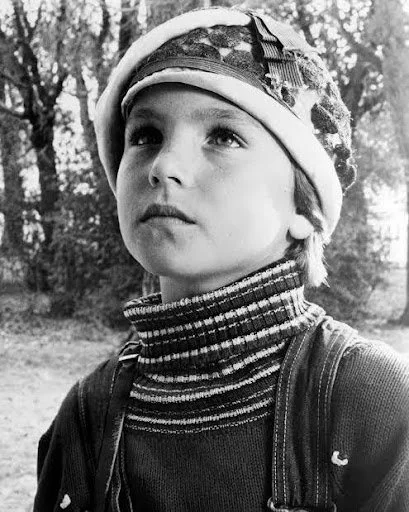
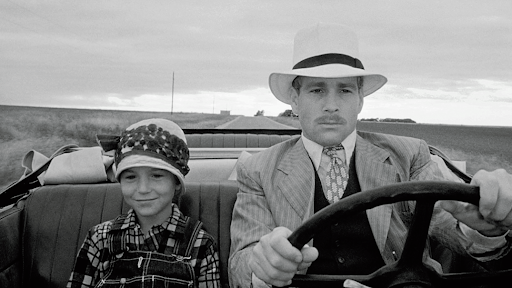
Addie Loggins (Tatum O’Neal) in Paper Moon depicts a classic tomboy appearance as she survives the 1930s Great Depression while wearing overalls and a cap that covers her entire head. She is often mistaken for a boy by those she encounters, including a store clerk who sells her more feminine attire like hair ribbons. While Addie does wear dresses intermittently throughout the film, especially when attempting a con with her traveling companion Moses Pray (Ryan O’Neal), those moments of donning more feminine apparel only further emphasizes her tomboy character when she returns to her more preferred choice of attire. Both Addie’s feminine and masculine wardrobes are her own choices, proving her independent personality. The feminine garments are meant to deceive unsuspecting citizens of money; the masculine clothing is her natural state of being.
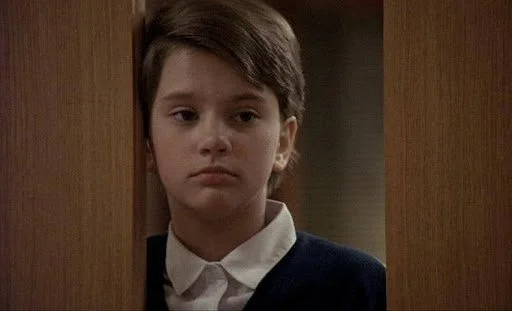
Similarly, Saga (Melinda Kinnaman) in My Life as a Dog adopts a more masculine appearance, wearing pants and shirts while sporting a short haircut. Ingemar (Anton Glanzelius), the leading character of the film, doesn’t realize that Saga is a girl upon first encounter after she knocks him down while playing soccer. Saga recruits Ingemar to assist her tomboy appearance, as he helps her hide her growing bosoms with a makeshift wrap to flatten her chest, in order that she may still play sports. Throughout the film, Saga is fully aware of her changing body, even commenting on it to Ingemar to romantically entice him. She is also hyperaware of the other romantic suitors that are interested in Ingemar, girls of her own age who wear more feminine clothing like dresses. Saga’s uniqueness as a tomboy is that she expects to be appreciated and included in all the passions she pursues including sports and romance.
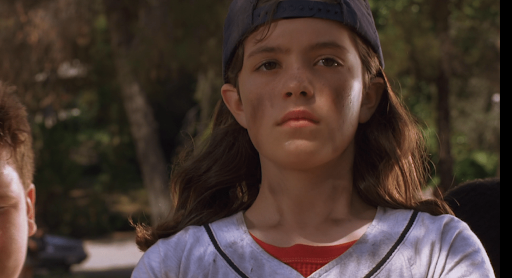
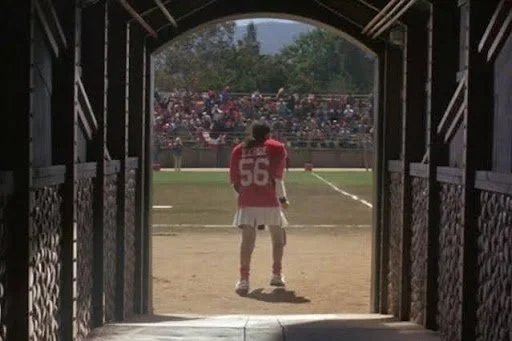
Becky “The Icebox” O’Shea (Shawna Waldron) is also a supporting character in the film Little Giants, but, truthfully, is the heart of the movie. As her community’s most talented football player, she appears throughout the film wearing athletic gear or donning outfits that denote a tomboy personality such as a baseball cap worn backwards, long-sleeved shirts, and shorts. She is set apart from her female cousins who are far more feminine and participate in sports as celebratory cheerleaders. Becky paints her face with eye black rather than with makeup. Like Saga, Becky expects to be included in the passion she pursues, a boys-only peewee football team.
Another hallmark of tomboy characters are the activities they partake in typically male-dominated pastimes or professions. It is not hard for American audiences to accept these characters’ pursuits since our own history has iconic cultural images such as Rosie the Riveter who represented the women who worked in factories and shipyards providing supplies during World War II. Additionally, the enactment of Title IX in 1972 greatly increased the participation of females in organized sports. Thus, with females already participating in fields that formerly comprised mostly male involvement, it is only natural that these characters exist fictionally in film narratives as well.
Addie’s talent for confidence tricks furthers her identity as a tomboy. Introduced to Moses as a recently-orphaned girl in need of travel assistance, Addie proves to him quickly that she is his match when it comes to games of trickery. She stands up to Moses demanding equal share of his most recent swindle, accepting money from the brother of the man who ran over her own mother. Addie’s talent for spotting unsuspecting citizens aids Moses in his Bible-selling hustles, knowing when to increase the price of “the good book” to those who have more wealth to spend. Thus, Addie becomes Moses’ protégé, a tomboy only too eager to learn the con man’s craft.
Saga is her community’s most talented athlete, dominating her peers in both soccer and boxing. When Saga competes against new challengers in the ring, onlookers call her “Floyd Patterson” after the reigning Heavyweight Boxing Champion. While she enjoys succeeding as a talented athlete, sports are also the means for her to initiate a romance with Ingemar. After kicking a winning goal in soccer, she attempts to kiss him, in the hopes that he will return her affection. Instead, he rejects it, as he’s not ready to accept such advances from the town’s local tomboy. But Saga is a willing competitor, even in romance. When she trains with him in boxing, she attempts to further their friendship, daring him to treat her like a woman even though her appearance and approach is so boyish. When Ingemar later accepts a party invitation from a different girl, Saga intrudes upon their intimacy, tearing down posters in the girl’s room and challenging him to a final boxing match, winner take all. Saga competes in sports and romance to succeed as the tomboy champion, worthy of Ingemar’s love.
Despite her athletic prowess, Becky is refused inclusion in the town’s pee-wee football team. Her own uncle, a famed football athlete and coach of the team, denies Becky a roster spot because of her gender. Ever the competitor, she convinces her father to form another football team, composed of a roster of fellow rejected players. Even though Becky is a tomboy, she yearns for participation. After all, she wants to make the team based on her ability despite the barrier of gender. As the narrative unfolds, the real competition for Becky is not the game of football but of her own identity as she develops a crush on her talented teammate, naturally the quarterback, Junior (Devon Sawa). How does the tomboy advance in life if such feminine feelings emerge?
The crisis of identity for tomboys is a consistent moment in their narratives. It is the moment when the tomboy is potentially ‘tamed’, either by societal pressures or by the pressures they put on themselves. These moments are often ‘makeover scenes’ in which the tomboy experiments or learns to be more feminine. Despite their determined efforts to adopt a more boyish appearance and succeed in male-dominated environments, tomboys age like anyone else and must decide if that identity is what they wish to maintain as they mature. This narrative dates back to ancient mythology when heroines such as Atalanta competed to retain their independence or attract a romantic partner.
Though the relationship between Addie and Moses is protégé-mentor (potentially even daughter-father), there is an interesting moment when Addie does put on her mother’s perfume in hopes of pleasing Moses (it doesn’t). When Addie meets Trixie Delight (Madeline Kahn), a carnival dancer who enjoys Moses’ attention, she immediately pouts at being demoted to the back seat in favor of the more feminine, physically-mature woman. The scene where the rivals confront one another heightens the difference between the two as the older woman offers to teach the tomboy on how to make herself more pretty as an offer of truce. Though Addie acquiesces, she immediately begins plotting a rival tryst for Trixie that will spoil her blooming romance with Moses. In a film full of conning, Addie’s destruction of their romance confirms her determined, tomboy identity. As she and Moses return to traveling by themselves, Addie takes delight when he tells her “when you grow up, don’t be the kind of woman who goes around deceiving men.”
Near the conclusion of My Life as a Dog, Saga wears a dress when inviting Ingemar to listen to the 1959 heavyweight title match between Floyd Patterson and Ingemar Johansson on the radio. It is Saga’s makeover moment when adorns herself with more feminine clothing. As the whole town listens to the match on their respective radios, the scene shifts to Saga and Ingemar asleep together as the announcer exclaims the surprise victory of Johansson over the champion Patterson. While this may seem like the moment when Saga rids herself of her tomboyish identity, consider this – if she was always romantically pursuing Ingemar throughout the film, has the tomboy really lost?

As Becky’s feelings for Junior deepen, she notices that her rivals for his affection are, of course, the cheerleaders. Thus, Becky trades her football pads for pom-poms and decides to become ‘one of the girls’ to the dismay of everyone including her coach/father, her teammates, and even her potential suitor. In the maturation of life, attracting a romantic partner is crucial, even for a tomboy. Ironically, adorning herself with more feminine attire and activity, Becky hurts her chances to being fully recognized for the person that she truly is; that is, the tomboy who attracts a talented quarterback such as Junior to play for her squad of fellow rejects rather than the exclusive, all-male team helmed by her famous uncle. Naturally, the two teams face off against each other in a climactic showdown which forces “The Icebox” to return to the field in a hybrid attire of football gear with a cheerleading uniform underneath. The result of the football game finds Becky celebrating with Junior. Since they are still kids, in a film produced by Amblin Entertainment, there is no dramatic kiss, but instead a comical pause in which both characters think about smooching, then return to jumping up-and-down like the winning teammates they are.
From these selected films, we see the presentation consistencies of the tomboy through appearance, activity, and the narrative ‘makeover’ scenes. Yet, questions remain regarding the tomboy. Are these presentations even realistic in the modern world? In her book Tomboys: A Literary and Cultural History (2008), Dr. Michelle Ann Abate wonders “whether [tomboyism] will remain a real and relevant social identity or become an increasingly antiquated idea[?]” It is important to note that in these three selected films, two of the tomboys are presented with heterosexual preference. But what of tomboys, in the rise LGBTQ+ and queer theory, who choose alternate romantic partners? Lou (Kristen Stewart) in Love Lies Bleeding (2024) certainly fits the tomboy mold as she becomes romantically involved with bodybuilder Jackie (Katy O’Brian). There is also the analysis of the tomboy through a racial lens, in which a great amount of their narratives feature characters coming from a privileged, Anglo background. In the book Tomboy: The Surprising History and Future of Girls Who Dare to Be Different (2020), author Lisa Selin Davis writes “tomboyism is firmly rooted in racism,” noting the different portrayals between white tomboys and black tomboys in fiction and in reality. However, Hushpuppy (Quvenzhané Wallis), a six-year old surviving the Louisiana bayou in Beasts of the Southern Wild (2012) was received with acclaim, with Wallis earning an Academy Award nomination for her tomboy portrayal. Imagine the creative narratives that could further exist for tomboys coming from more diverse backgrounds involving sexuality and race.
Nevertheless, the tomboy continues to endure as an endearing character in film. A tomboy is an empowered girl who is resilient, courageous, and daring. They break down barriers lines by sheer will and choice. There is no reason why future portrayals cannot feature more diversity because a true tomboy refuses to be pigeonholed no matter the consistency of clichés that are forced upon its identity across time and differing geographic cultures. A tomboy today would not necessarily resemble the characters set in 1930s Missouri or 1950s Sweden or 1990s Ohio. Instead, tomboy presentation could become fluid as gender representation evolves rather than remaining a static stock character. In accordance with its late 16th century definition, a tomboy is forever untamed.
If you enjoyed this article, please consider becoming a patron of Hyperreal Film Journal for as low as $3 a month!
Paul Feinstein is an arts professional who has produced content in different mediums including film screenings, live music, radio, and theater. He is a native Austinite.