
Scarlet: Style Without Substance
Scarlet is the latest film from director Mamoru Hosoda and is a time-bending retelling of Hamlet. When Scarlet’s father, the king, is slain by her uncle, King Claudius, she works tirelessly to avenge his death, which ultimately leads to her demise. While traversing the afterlife, she meets Hijiri, a nurse, who helps her on her journey and teaches her that maybe revenge isn’t the way after all.
Scarlet is Hosoda’s eighth feature-length film and his fourth solo writing credit. This time he raises the question of what if people from high fantasy interacted with someone from modern day. How would they react to our medicine? How would they react to the way we look? The answer is a little more uninteresting than the question leads you to believe. Wrapped up in this film are two plots that are vying for attention. One about Scarlet learning to let go of her hate and see the good in people, and the other is a story about her finding love.

The storyline about her finding love is interesting but overall underwhelming as there’s only one scene of development between Scarlet and Hijiri, which comes in the form of a bizarre and out-of-place musical number in the future. The characters have no real sense of depth, serving as basic archetypes of an angry person trying to find themselves after losing so much, and a stand-in for a lawful good character whose only ambition is to help people. These aren’t bad things in theory, but when they aren’t further explored, it can cause a slog for a movie whose runtime clocks in just under two hours.
All of this wraps up in a bow that doesn’t justify the movie’s turns. The writing in Belle was excusable because of how intense that movie’s visuals were; they carried the narrative, and the musical retelling of Beauty and the Beast worked well. Where Belle took the adaptation and brought it to the modern day and questioned technology’s purpose in dating and relationships and exposure in a powerful and exciting way, Scarlet falls flat with dull characters who are motivated by only one thing. Rather than exploring the idea of time mending wounds and the implications of war’s existence in the future, we’re served straightforward platitudes about how bad war is and how we should try to be better as people to end war in the future.
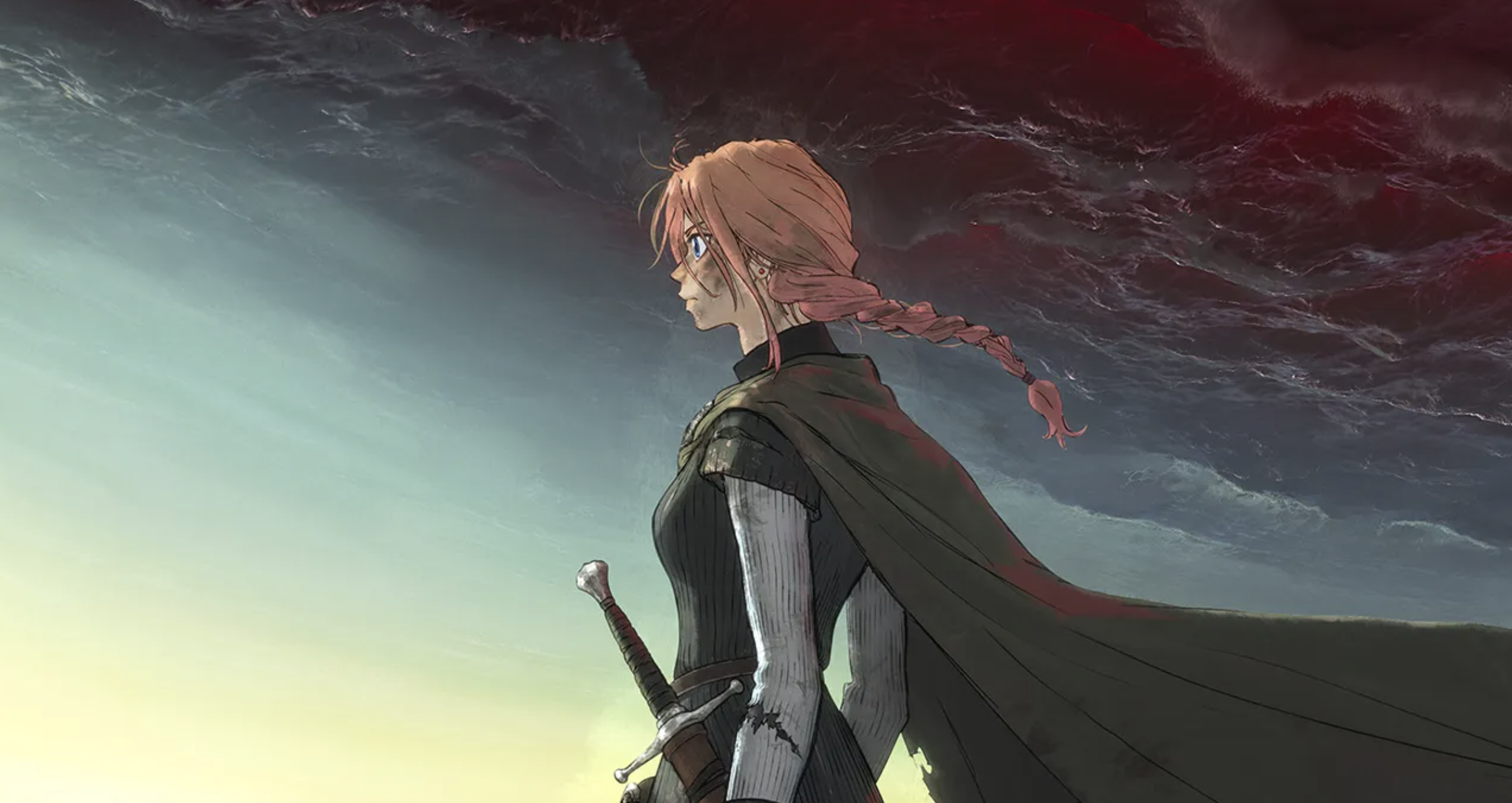
On a more positive note, while the story of revenge is a bit played out, it serves as a vehicle for the visuals on display, and whoa buddy, are they on display. This movie is gorgeous. The animation blends a handful of styles and smashes 2D and 3D animation together to execute its look. In the real world, we’re treated to some beautiful traditional anime styles. Purgatory looks good, and as Scarlet and Hijiri traverse the different landscapes, the styles continue to change. This isn’t a Spider-Verse situation, but for anime, it’s ambitious and takes a number of visual risks. The battles here look more akin to a video game cutscene than an animated film, looking like something from one of the latest Fire Emblem games. The action is fluid and impactful while still having the feeling of an anime fight scene.
Ultimately, the visuals are the saving grace here because the script is weak even by anime standards. There is no power creep to any of the people involved and there is no moment of weakness because everyone is already dead, which makes the stakes feel low. The rushed romance plot is there, but it doesn’t do much to contribute to the film. Overall, Scarlet is just fine. Hosoda’s other directorial feats feel more complete than this one and feel like they carry a bit more heart to them, instead Scarlet feels empty aside from the visuals, which clearly had a lot of love put into them.
If you enjoyed this article, please consider becoming a patron of Hyperreal Film Journal for as low as $3 a month!
Blake Williams has a B.A. in Film and Television Production from Ball State University. He aspires to one day be a director, but until that day comes you can find him at a showing of whatever's playing that day or at home alphabetizing a shelf of movies and games and muttering about how he should "slow down on spending."