
Be Bugs Bunny: A List of Movies Where the Characters are Just Playing Bugs Bunny
“Be Bugs Bunny” is a note that, presumably, a few actors have heard in their careers; it is certainly something Mel Blanc heard a few times. Movies, by their very nature, are big: they are major events, massive moments, life-or-death sort of things. Even the smallest stories feel grandiose on the silver screen. When filmmakers make big movies, there’s a risk that the characters or the set pieces will be so large that an audience loses the relatability needed for emotional storytelling. How do you counteract this? You create characters that are larger than life. And what’s the easiest way to get the audience to buy into a big performance? To make your character Bugs Bunny.
Now, what does it mean to “be Bugs Bunny” and how does that make an actor’s onscreen presence more impactful? A great question with a 2,000-word answer.
In the pursuit of having a readable article, context is in order. Bugs Bunny is an icon unto himself. He is synonymous with Looney Tunes, Warner Brothers, and animation in general. If you threw a rock into a busy street, it would be difficult to hit someone who couldn’t attempt an impression of his famous “What’s up, Doc?” catchphrase. Part of the reason for this general adoration and legacy comes from who he is as a character: Bugs Bunny is counter-programing for characters like Mickey Mouse. Whereas the mouse is genuine and “hey, golly skipper!” all the time, Bugs will pull your shirt over your eyes, kick you to the moon, and wink at the audience.
He is the ultimate example of never taking a moment seriously–a smooth-talking savant of pranks with a silver tongue. In most iterations, he is aware that he is in a cartoon world, as well as the advantages that accompany that world. While the characters around him grasp their reality, Bugs embraces the unreality of every situation. At any moment, he could spin his head around 360 degrees or drop into an impression of Clark Gable in It Happened One Night. On top of all of this, there is this fundamental sense of antagonism that he possesses, both in his defiance of character expectations and plot structure. It’s almost hard to contextualize how important he is, but hopefully this fun fact can do the trick: Bugs is so much of a cultural touchpoint, he is one of the major reasons why we associate rabbits with carrots.
So how does that translate to cinema as a whole? When do we reach this point where Bugs stops referencing other things, instead becoming the reference himself, or–in the case of the examples below–when does he become the blueprint?
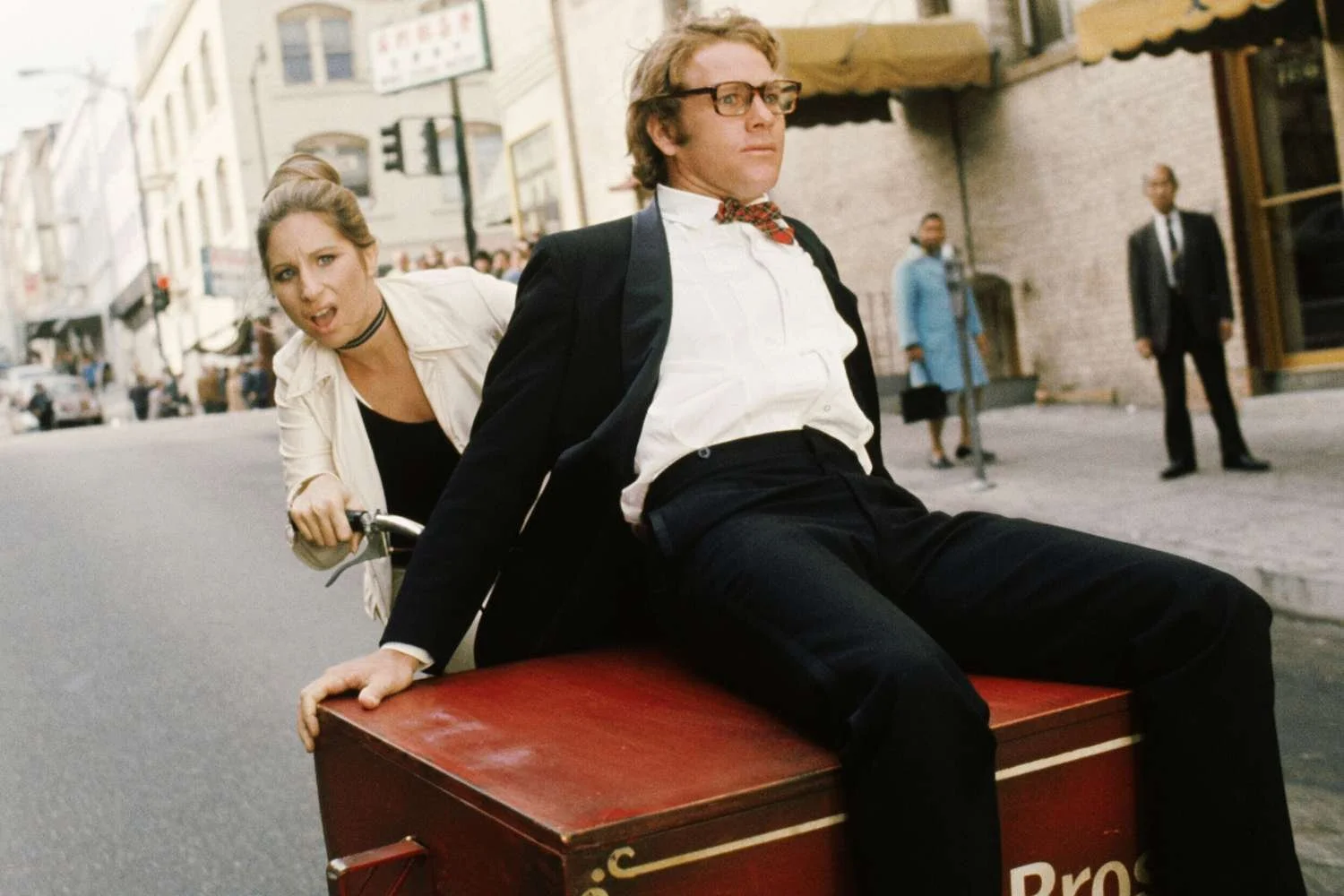
What’s Up, Doc? (1972) - Judy Maxwell
It would be both cinematic and medical malpractice not to start this list with Barbra Streisand’s performance as Judy Maxwell in Peter Bogdonovich’s screwball comedy What’s Up, Doc? A defiant and hilarious role if there ever was one, Babs keys into the most fundamental aspects of the Bugs Bunny character: radical lying for entertainment, and picking out a schmuck as the focus of her delinquency.
The film is a comedy of errors at every turn, intertwining the lives of its characters in increasingly absurd ways. The plot revolves around the characters’ four identical suitcases, and situations begin to spiral as they search for clothing, jewels, government information, and igneous rocks that will help Ryan O’Neal’s character win a musical grant. Streisand plays a young vagabond that drifts into the life of O’Neal’s Howard Bannister, the sucker of the picture. After a whirlwind meet cute, she firmly cements herself as his personal maestro of chaos for the remaining runtime. She’s slick, fast-talking, and beautiful while wearing women’s clothes: everything you need from a Bugs Bunny performance. In this role, she is able to accomplish a level of charisma that most actors dream of conjuring. Despite her propensity for truth-bending, she consistently convinces the world around her that she’s never told a lie. People either fall for her spell or find her so grating that they spiral into screaming fits (major shoutout to Madeline Kahn).
What makes this the quintessential Bugs performance isn’t Streisand’s carrot-munching, her slips into an over-the-top Bronx accent, or even the ending of the film (where she says the titular line with the Looney Tunes theme playing in the background); it’s her commitment to messing with a putz and her determination to never allow him a moment of reprieve from the zaniness of a situation. Bugs’ most defining relationship is probably with Elmer Fudd, the (very) bald hunter who embarks into the woods during “rabbit season” in search of hares. During these outings, he always runs into Bugs Bunny–who convinces him that it’s not actually rabbit season, or that he’s not a rabbit, or something to that effect. In the case of Whats Up, Doc?, Howard is Judy’s Elmer Fudd; the normal, grounded character that Bugs or Babs clings onto and takes for a ride. These characters present a call to action for them: an obligation to rescue the square from a life of mediocrity. These rescue missions look more like sabotage in the moment, especially for Judy and Howard (as she talks her way into conversations that he is forced to talk them out of). She’s always the wittiest and quickest one in the room, and no one has any hope of keeping up with her.
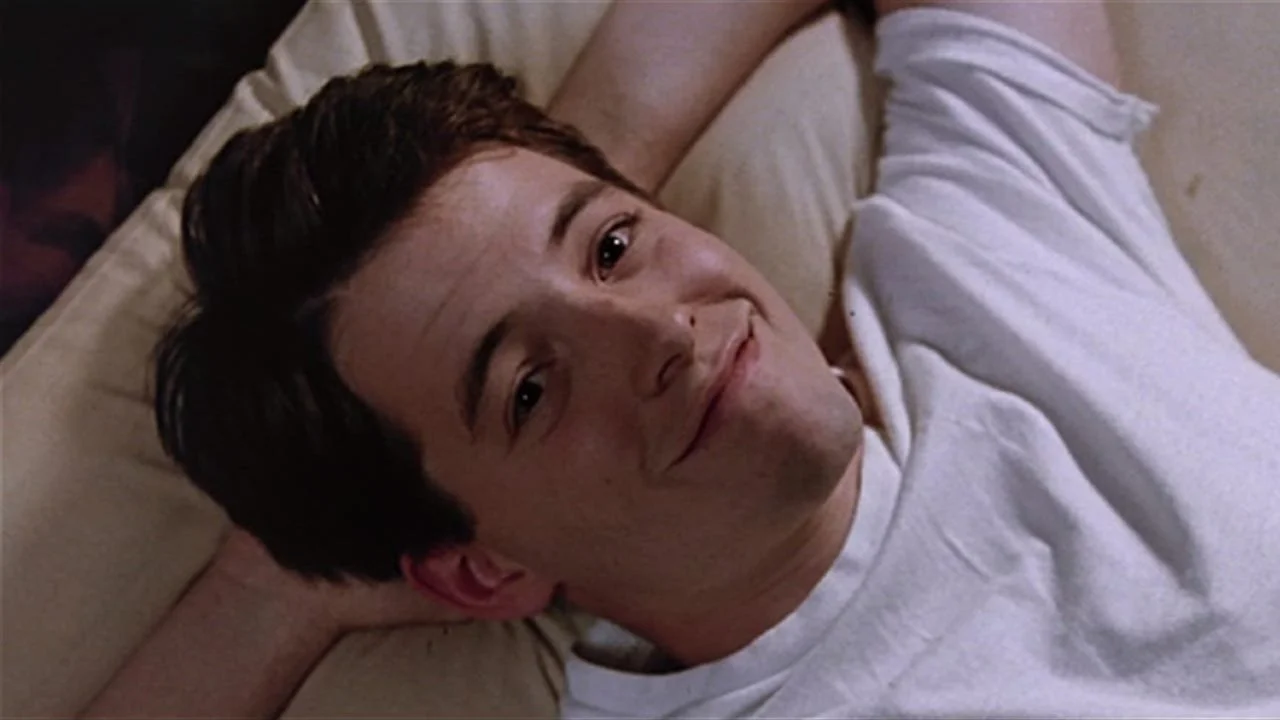
Ferris Bueller’s Day Off (1986) – Ferris Bueller
Ferris Bueller’s Day Off is John Hughes’ most impactful film–it is certainly his largest in terms of scale. The film’s plot features the titular character, Ferris Bueller (Matthew Broderick), playing hooky and reinventing the word “hijinks.” It’s a simple premise, but it carries seemingly ginormous stakes (at least, ginormous for the teenager). Skipping school is one of the most accessible moments of defiance for someone in high school, representative of claiming independence for maybe the first time in one’s life. It’s a scheme that can result in punishment that takes all of your freedom away; it’s risking it all for total independence.
The film isn't about anything as momentous as saving the earth from total destruction, but it feels like that, and it feels like that because of Ferris. He is a character that looms large, both culturally and within the frame of the film, and makes it all feel larger than life–whether through a lie that spirals out of control and ends up convincing the whole school that his illness is terminal, or him finding a way to sneak onto a parade float to sing The Beatles. His chaotic charisma carries the film and is what allows the plot to crescendo. Bugs, a well-known deviant, carries a lot of that same glitz and absurdity. It’s all about zagging when everyone else is zigging; operating against traditional plots. Life is more interesting when there’s no telling what’s next, and these characters’ chaotic bucking of the status quo is the name of the game. They’re going to defy the proposed structure, and seemingly everyone cheers them on when they do it–maybe because it taps into their innate desire to stand out in some way.
The Jackass Series (2002-Present) – Johnny Knoxville
If you’ve ever seen the Jackass films, or heard Johnny Knoxville talk, this entry may feel obvious. If you’ve never seen the films, it’s not hard to piece together a plot from the title alone: a group of friends relentlessly prank and harm each other in the pursuit of a laugh and scientific discovery. What Knoxville achieves with these films is an unwavering sense of cartoon logic. From being shot out of a giant cannon, to running into a wall that’s painted to look like a road, to outrunning a bull with a blindfold on, he always pushes to make life a cartoon. It’s so effective that it reaches a point where you suspend your disbelief and become convinced the participants could hover over the side of a cliff after running too quickly off the edge.
That’s kind of the Bugs Bunny special; he, like Knoxville, seems to be the only one who is aware he is in a cartoon, and uses that skewed logic to torment people. There is no one like Bugs who can use the wacky world to get a leg up on people. To demonstrate what I mean, let’s take a quick trip to 1996 and talk Space Jam. Losing big to the Monstars during their basketball game, the Tune Squad are out of hope and ideas. During halftime, Bugs conjures a water bottle and transforms it into “Michael’s Secret Stuff” (“Michael” here being famed basketball player Michael Jordan, who plays with the Tunes in the film) to inspire the team. The Tunes gobble up the secret stuff (please pause to allow the euphemisms to run freely in your mind) before returning in the second half with a newfound sense of confidence. From there, Bugs makes James Naismith roll over in his grave by putting dynamite on the baskets and driving a car around the court, allowing Jordan and the Tunes to win the game with a half-court dunk. Anyway, this digression was mainly to point out that Bugs knows he’s in a cartoon, so he knows he can set the stakes. Johnny Knoxville approaches Jackass in the same way, setting the stage to make the impossible feel totally possible. Maybe he unlocked something; it really does feel impossible for male genitalia to take as much damage as it does in the series without being in a cartoon.

Birds of Prey (and the Fantabulous Emancipation of One Harley Quinn) (2020) - Harley Quinn
Margot Robbie is no stranger to the big performance. From her pop culture introduction as the Duchess of Bay Ridge in The Wolf of Wall Street, to her performance as Tonya Harding in I, Tonya, to playing the titular character in Barbie, it’s clear that she knows what it takes to make a memorable performance.
Superhero movies are often disregarded because they’ve become their own uninspired genre. No one is looking to talk about performances in superhero flicks because the actors are not the important part; the characters are the part that matters. When a character is larger than the movie, the actor becomes even more invisible. Robbie specifically seems to be one of the actors that has transcended this stereotype. With only a few performances as the lovable loon Harley Quinn, she has essentially cemented herself as synonymous with the role; it’ll be hard to discuss live action Harley from here on out and not look toward Robbie. This could just be the result of her being the first to portray the character in a major motion picture, but the vibe tends to be that her performance is enduring. I believe this is linked to her ability to take the essence of the character and imbue it with her own personality, which speaks to her abilities as a naturalistic actor. It feels like she’s never had a small role since she was propelled into the studio system, but each of her characters complements their film because of her innate naturalism.
Birds of Prey follows Harley Quinn post-Joker breakup, as she navigates the newly-realized consequences of her actions. There’s a diamond and a group of other anti-heroes, Ewen McGregor is in it, and Mary Elizabeth Winstead plays The Bride from Kill Bill: it’s all really fun! But what stands out immediately is the lunacy of Harley Quinn. She starts the movie by breaking the fourth wall and addressing the audience directly, and she continues to do so throughout, much like our favorite hare. That’s the trick to both characters: life’s a joke and you’re in on it. No moment should be taken seriously, lest you lose your vivacious edge. In Birds of Prey, the most stylish example of this trait is when Quinn enters a police station to break Ella Jay Basco’s character out. Instead of approaching it like a sneaky prison break, she walks through the front door wearing a femme fatale-esque outfit and talking like she’s in a James Cagney movie. After a quick and cheeky interaction with the cop at the front desk, she pulls out a sort-of t-shirt cannon thing and shoots a beanbag at his face, splitting his eyeglasses in two. She then proceeds to march through the station with the cannon and a bandolier full of miscellaneous tubes in tow. Some of them have bean bags, some have colored smoke, some have confetti–you really have no idea what you’re going to get next. That’s the Bugs Bunny way: the success or failure of a mission doesn’t matter as much as making it fun (specifically, making it fun for the audience). There’s no interest in competence when chaos is available. Life is random, so roll with the punches and have a few laughs along the way.

So, it’s clear that there are a lot of variances in approaches to playing Bugs Bunny. There are a few cornerstones–slick talking, parody, mischief–but more than anything, it’s a choice. In the best cases, it’s a distinct choice that an actor makes and not something they fall into on set. Acting is hard and embarrassing; there’s so much vulnerability, even in big performances. “Be Bugs Bunny” is a great note because it’s a mask, an impression for the actor to hide behind, and thus creates an uninhibited fugue state.
While there was no mention of him on the list, it seems fitting that a quote from Christopher Walken should end this piece. It can serve as your calls to action: both to require Bugs Bunny performances on set, and to spot the performers that have heard the note.
In a Washington Post interview, Christopher Walken talked about the major influences on his artistry, saying, “He’s [Bugs Bunny] so smart, he’s so funny, he’s got such a great attitude. Bugs Bunny is the spirit of New York, you can’t fool Bugs Bunny. That’s all I have to say. He’s on to everybody.”
If you enjoyed this article, please consider becoming a patron of Hyperreal Film Journal for as low as $3 a month!
Hello! My name is Eli and I am a film fanatic based out of Houston, Texas. I am currently working on becoming a filmmaker, while also working full time. Film is my hyper fixation turned passion. I simply adore the flicks! I love learning about the history of cinema and seeing how that history shapes what we watch today.
I talk about movies on my Instagram: @notelifischer, TikTok: @loads.of.lemons, and Letterboxd: @Loads_of_Lemons