
AFS Program: Early Films by Jia Zhangke
When viewing a career retrospective of a celebrated film artist, one inevitably finds patterns in the work on display–whether we’re talking about actors, directors, or writers. With regards to directors in particular, one finds patterns in the stories that they choose to direct, characters and visual ideas that repeat across films, and themes that define their career. Austin Film Society, in co-presentation with the Austin Asian American Film Festival, recently screened a series of early films by renowned Chinese filmmaker Jia Zhangke. The program, which screened films from his debut feature Xiao Wu to his Golden-Lion-award-winning Still Life, revealed more than just recurring characters and visual ideas. Adrift On The Other Side of The World: Early Films by Jia Zhangke revealed a conscious artistic statement that blends the world in front and behind the camera, using any tool necessary to depict the lived experience of China’s working class during the country’s rapid globalization.
From the very beginning, Jia had a mission as a filmmaker: to tell the story of his world; his friends and family living outside of China’s major cities as the country changed under massive political unrest and the development of a more globally-focused economy. A member of the Sixth Generation of Chinese filmmakers, a loose collective who got their start producing underground films (those made outside of the studio system and the government’s film approval process), Jia had the freedom to tell the stories he wanted as long as he accepted a lack of institutional support. What he lacked in funding and access, he made up for with connections made in art school and an obsession to film what he could, where he could, and with whatever equipment he could get his hands on. Like many first-time feature filmmakers before the digital camera revolution, he started with 16mm.
Xiao Wu
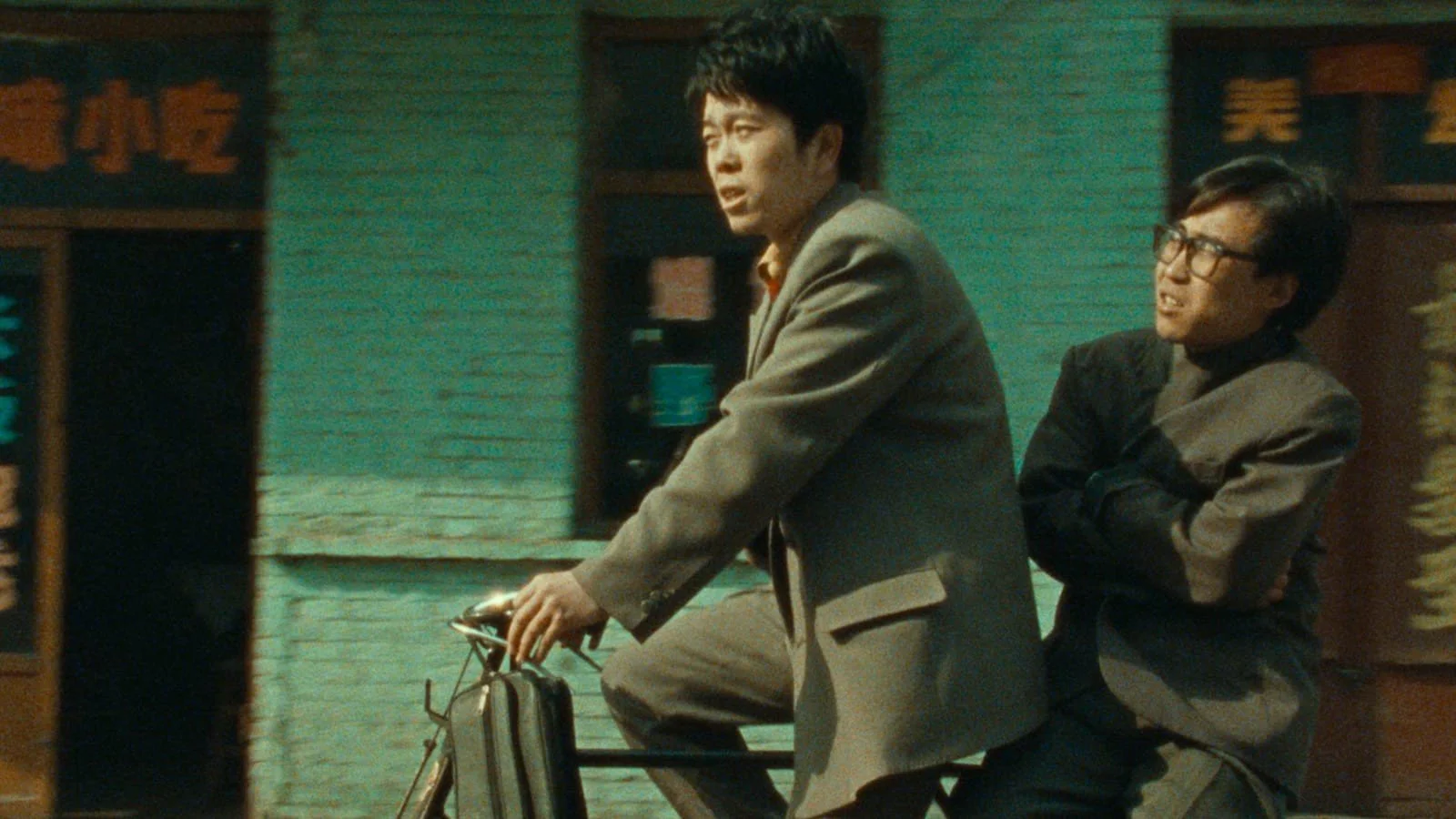
1997’s Xiao Wu, Jia’s first feature, introduced him to the international cinema scene as something akin to a street photographer. Shooting without permits on the streets of Fenyang with a cast of local non-actors, Jia–with cinematographer Yu Lik-Wai and his 16mm camera–finds images that blend the perceived reality of his narrative with the reality of the world outside of it. The story follows the eponymous Xiao Wu, a pickpocket returning home after a stint in prison. Already, his world has changed immensely and he finds his usual accomplices have also moved on, adjusting to the economic hardships and the stricter law enforcement of their growing city. Like many first-time feature filmmakers, Jia uses the criminal world, a classic cinematic setting, to critique the world that has been built around the disenfranchised. The fictional world of the film and the real Fenyang at the time are not that different from each other.
Fenyang and its citizenry, the many non-actors featured in the film, is the source of Jia’s artistic statement. He saw the city’s mining workers lose their jobs to the changing economic climate and saw economic interests from outside of the city replace the local businesses that were losing purchasing power in their own city. The criminal world, which Jia had found himself on the periphery of growing up, was not just a creation for the film. It was a real perspective on Fenyang, which experienced hardships within a globalizing China and found illegal ways to fight back, and Jia uses this setting and these people as the building blocks of Xiao Wu. The way Jia and Yu shoot these non-actors and their environment, experimenting with the mobility and the grit that 16mm film allows, gives the film an improvisational feeling, like Jia and company are just capturing the world as they see it. The rules of narrative cinematography are broken and mid-scene adjustments to the framing of a shot are made throughout. Given that the filmmakers lacked the funding and permits to properly plan a shoot, these last-minute choices are all beautifully in service of the film. Through Xiao Wu, Jia addresses the most prescient concerns of Fenyang, and the filmmaker, soon to be its most famous resident, captures it like a home movie.
Unknown Pleasures
In 2002’s Unknown Pleasures, the second film of the series, audiences see a reversal in visual fidelity, but for a good reason; Jia abandons the costly and inflexible 16mm film camera for a new development in filmmaking technology. At the turn of the 21st century, digital video (DV) cameras became a more affordable and accessible medium for filmmakers, trading picture quality for a portable, digital camera that could capture a wider variety of locations on-the-go. Jia takes advantage of his new DV camera by taking his crew anywhere his community goes. In doing so, he tells a very kinetic story of a very stationary group: the members of his “one-child policy” generation, approaching their 30s and stuck in the malaise of generational pressure to achieve success in a time of increasing economic hardship. This generation’s solution: live in the now and try to forget about everything else. Our cast of characters, still in the criminal underworld depicted in Xiao Wu, go out to clubs, ride on their motorbikes, sing karaoke, and daydream about get-rich-quick schemes. Yu Lik-Wai, returning as cinematographer, captures fantastic images through the dreary lens of the DV camera: harsh blinding sunlight, pulsating club lights overwhelming the camera’s sensors, and danger-adjacent mobile shots, perfectly encapsulated by the real-time capture of a character fleeing on his motorbike as a lightning storm rumbles in the background.
The budgetary limitations of Unknown Pleasures, combined with the fidelity of the images, make the filmmakers feel more involved in the world they are photographing; a mixture of permission and acceptance from those in front of the camera. Jia even blends his personal reality, as well as the reality of his first film, into Unknown Pleasures:Xiao Wu the man returns in this film, and Xiao Wu the film is shown being sold as an illegal bootleg on the street. This self-referential style encourages audiences following his career to notice similarities between his films. Having the audience make these connections is vital to Jia’s artistic mission, as they encourage the audience to expand their view of how these films relate to each other and how that might reflect changes happening in Jia’s life. There is never a solid barrier between films, or between the real world and the film world, in Jia’s work–and, as he accepted institutional support and funding for his following film, this blending of realities only increased along with his greater access to technology.
The World
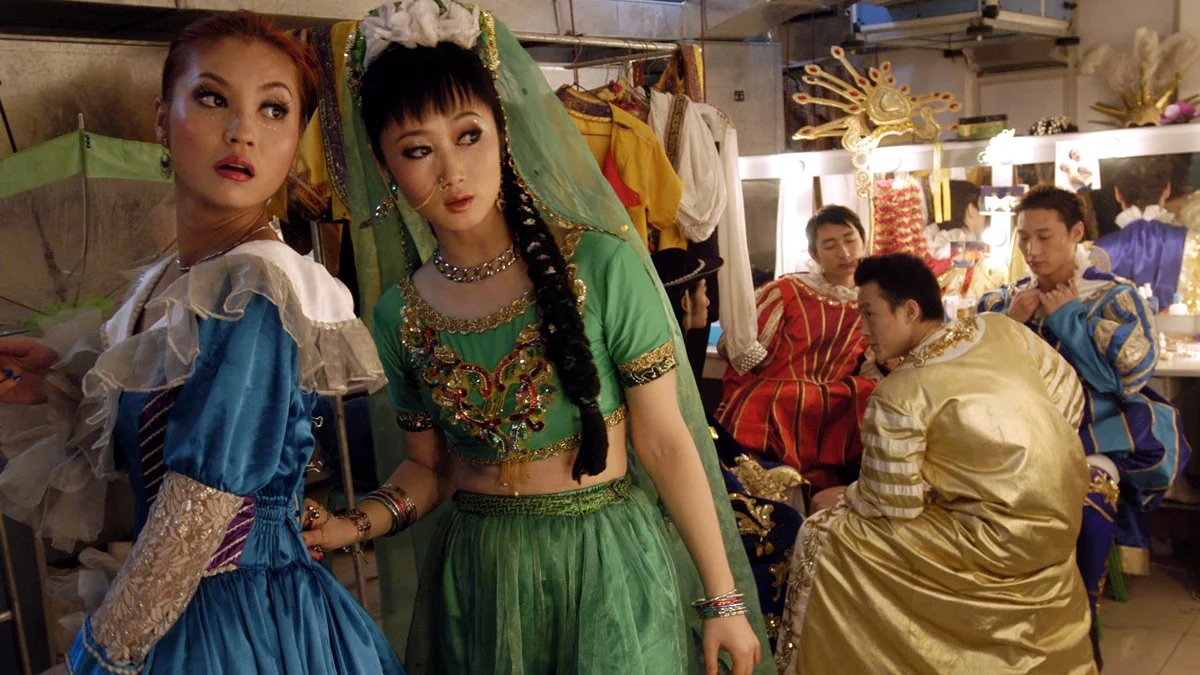
In his next film, 2004’s The World, Jia finds the perfect backdrop to expand the ideas from his previous films in a way beyond the gritty, personal reality of Fenyang: Beijing World Park. Like Disneyland, if the magic was being able to see both the Egyptian pyramids and the Eiffel Tower within walking distance, World Park attempts to deliver on its promise of “seeing the world without leaving Beijing”. For the upwardly mobile urban class, Beijing World Park is a fun diversion in the city where one can entertain the possibility of visiting such places, as more and more of these people have the financial and logistical opportunities to do so. For Jia’s struggling working class, who find employment within this massive theme park, international travel is a financial non-reality. They are stuck in this false land, pretending to be different types of people and performing as members of the cultures on display while surrounded by likenesses of their monuments.
Seeing Beijing World Park as a playground to explore his vision less narratively and more visually, Jia focuses his film on the day-to-day lives of those who make the magic come alive at the park. Employees of Beijing World Park fall in love and dream of a better tomorrow, all the while repeating the pattern of waking up, working all day, and going to bed. As he portrays multiple characters in this massive structure, we see Jia’s usual improvisational shooting approach traded in for incredibly articulated and planned takes. Jia and Yu illustrate the expanse of the place they are trapped in, following characters down long hallways, up massive elevators and into endless vistas, making the film’s subjects seem impossibly small compared to the world around them. Additionally, instead of his DV camera, Jia uses an HD digital cinema camera in The World, leading to the most traditionally beautiful cinematic images of his career so far. The higher fidelity of this format feels necessary to capture the expanse of the setting and his incredibly well-staged sequences.
Starting with The World, the most noticeable change in the lives of Jia’s subjects–both in his real world and his film world–is the proliferation of cell phones. Even those with the least financial mobility or ability to travel have cell phones to communicate, and, in a way, travel the world digitally “without leaving Beijing”. Jia brings attention to the presence of this highly available technology with the introduction of a new storytelling tool: Flash animation. In every scene where cell phone usage leads to a significant shift in a character's life, whether it's falling in love or discovering infidelity, Jia uses Flash animation (not unlike those you would find on Newgrounds back in the mid-2000s) to turn these moments into fantastical dreamy sequences. Cell phones, which connect the world more fluidly than any technology before them, become animated portals for characters to move around their world in impossible ways–but the moments never signal themselves as occurring in a character’s mind. This is Jia’s way of communicating the complexities of what his characters are feeling without resorting to the narrative cop-out of dreams and alternate realities. Seeing how telecommunication technology was changing everything, Jia’s animation treats this burgeoning digital world with the respect he gave the gritty material world with Xiao Wu and Unknown Pleasures. His use of animation signals the desire to transcend the ways he portrays the world of his subjects and expands the definition of what is real and what is not in his films, which becomes even harder to distinguish in his next film when he trades animated sequences for CGI creations.
Still Life
In the final film of the series, 2006’s Still Life, Jia takes a step back from the overtly artificial setting of Beijing World Park to tell a story within a very surreal event happening in China. In Still Life, two lovers search for their respective missing halves in the town of Fengjie, a town that the Chinese government was flooding at the time of filming due to the contemporaneous construction of the Three Gorges Dam. The film follows the heartbroken as they search for addresses that have been submerged, homes that have been destroyed before the floodwater reaches them, and former neighbors who are too busy with their new conditions to deal with their lovelorn journey. The presence of the flooded land, with its boats now used to traverse to different parts of the town, occupies virtually all exterior shots in the film, emphasizing the chaotic reality that the townsfolk were dealing with at the time. The two leads wander through town, as their neighbors destroy their remaining residences and businesses for compensation from their government, and find less and less that can lead them to their lost partners.
While the portrayal of floodwater and active demolitions does a very good job of communicating how poorly parts of China were being treated during this period, Jia takes it a step further and introduces elements that are literally out of this world. We see a UFO traverse the sky between the main characters and a building morph into a rocket ship and blast off into space, adding another layer of surrealism to the lives of Fengjie’s citizenry. This extraterrestrial imagery accentuates the strangeness of the very real land Jia presents in Still Life. The visual effects work themselves into the frame organically, looking about as real as anything else going on in the film. With floodwaters rising and rockets taking off, Jia seems to suggest that the only solution left for the economically and geographically sinking communities might belong in the world of science fiction.
Conclusion
Across a decade’s worth of feature films, Adrift On The Other Side of The World: Early Films by Jia Zhangke tracks the career of a dedicated cinematic artist with an unflinching desire to tell the story of his land and his people experiencing great change in real time. Jia’s work during the 1990s and 2000s expanded even further than these four features, including many documentaries and an entire feature (his second, 2000’s Platform) that couldn’t be shown, but these four selections articulate the trajectory of a filmmaker obsessed with his medium of choice and the story he wanted to tell as many ways as possible.
In the span of roughly ten years, Jia goes from man-on-the-street 16mm filmmaking to fully realized HD digital cinema with well-crafted visual effects and never introduces any spectacle without thematic or narrative purpose. New technologies are incorporated to tell the story of his people, and Jia weaves all of these films together to form a super-narrative of life that is too big for one movie to capture. Whether he’s using DV cameras to film club-goers up close under harsh rave lights or employing animation to convey how it feels to look too deeply into a text, Jia uses the cinematic toolkit at his disposal to highlight the similarities in the lives of all his films’ subjects. Whether they express it through committing petty crimes, going to clubs and karaoke bars, or searching for love, they are all adrift, looking for a sense of home that is slowly fading away.
If you enjoyed this article, please consider becoming a patron of Hyperreal Film Journal for as low as $3 a month!
This is Dylan Samuel. If you see him, say “hello.”